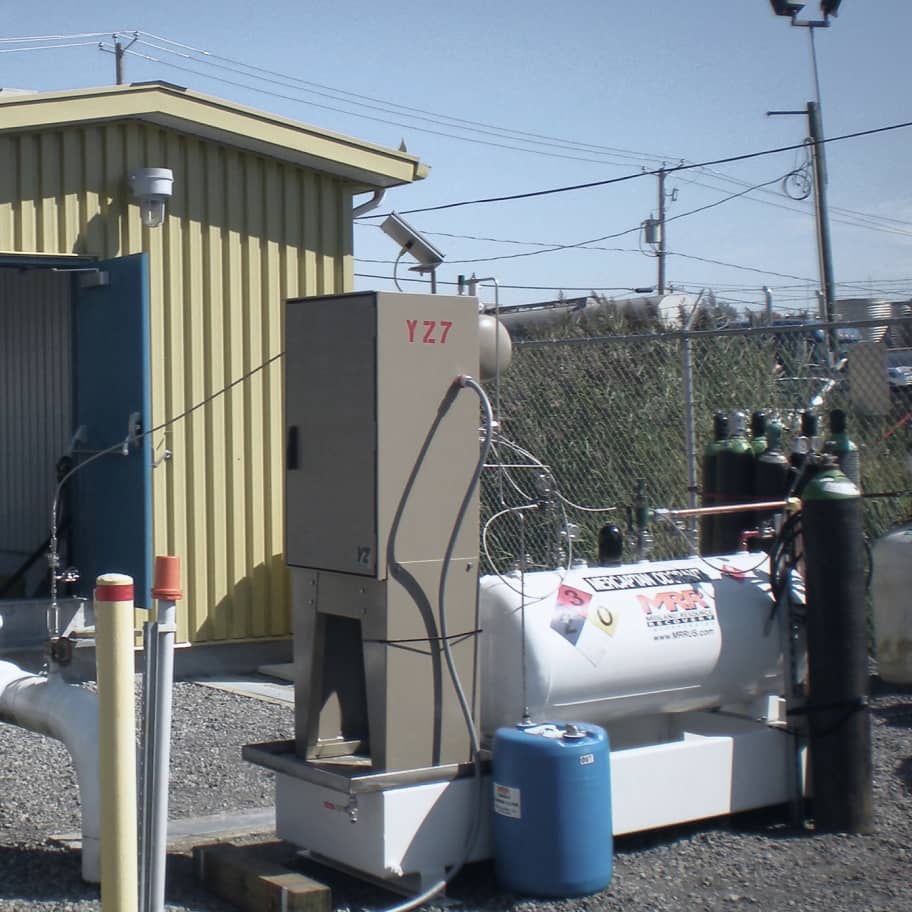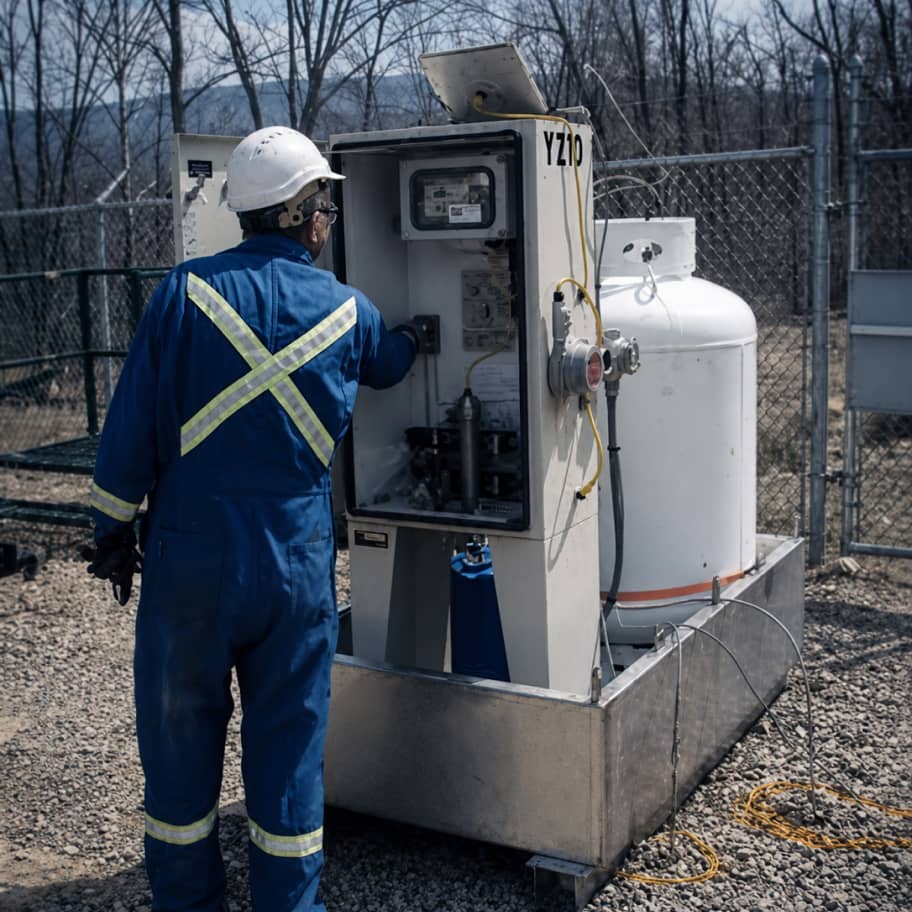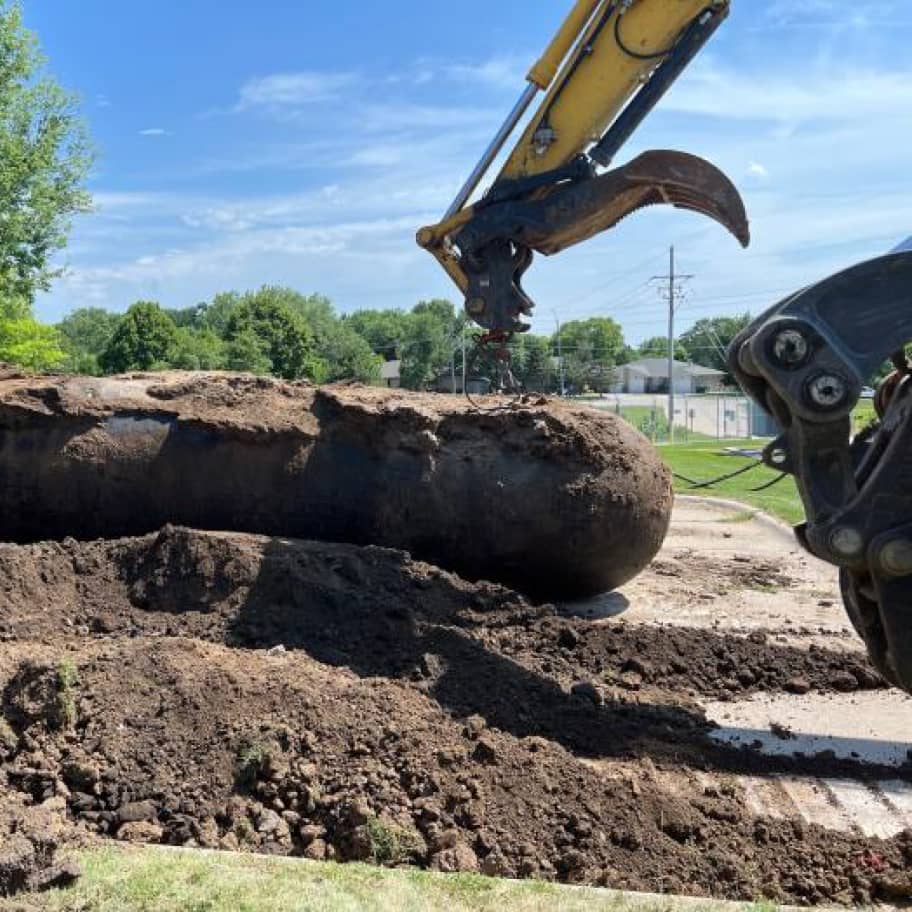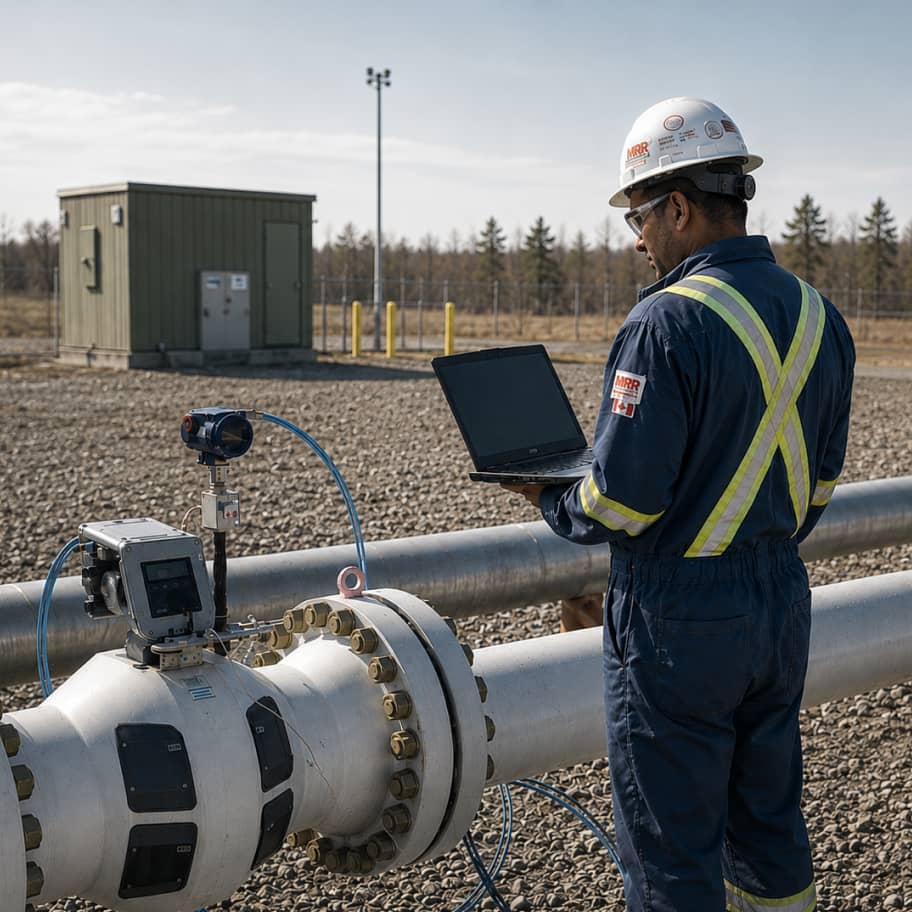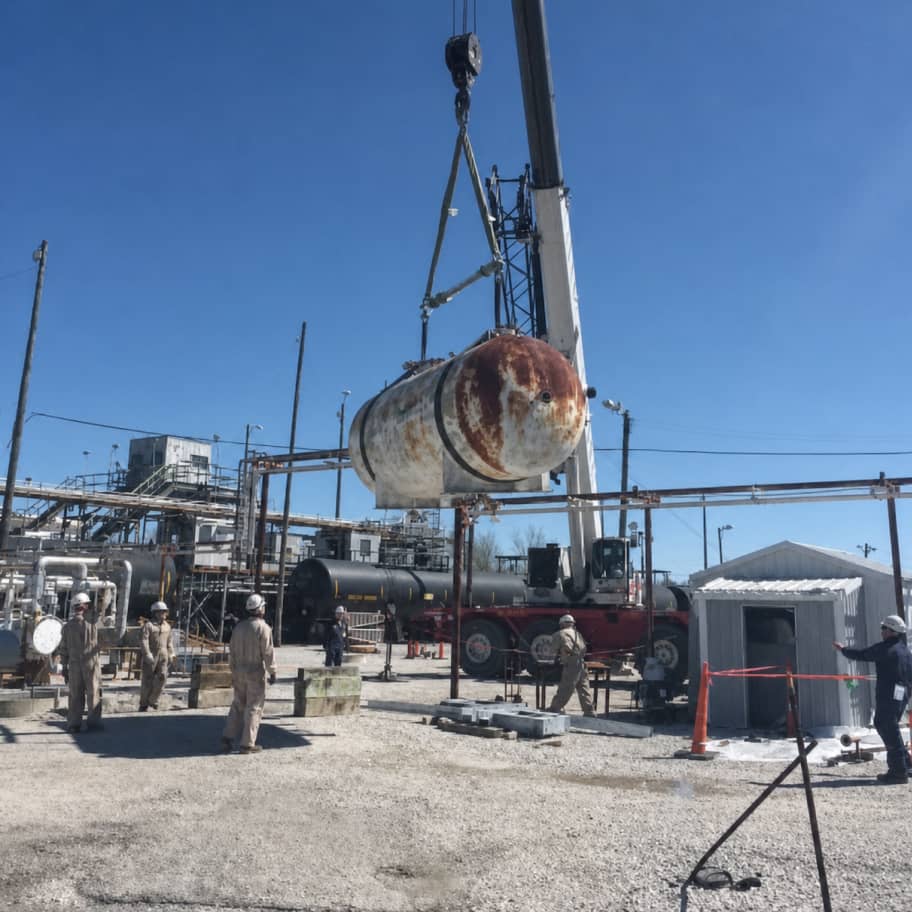
A refinery operator in Illinois needed to replace a 5,000-gallon ethyl mercaptan storage tank that had reached the end of its working life. The new tank — a 2,500-gallon unit — was to be installed in the same footprint as the original, meaning the old tank had to come out before the new one could go in. The 1,800 gallons of ethyl mercaptan held in the existing tank had to stay in productive use rather than being destroyed.
The scope demanded refinery-grade operational discipline. The site was active, the surrounding equipment was in service, and the work had to be sequenced to minimize disruption to the refinery’s broader operations. The 5,000-gallon tank, with its size and flange configuration, could not be transported to MRR’s Philippi plant for off-site treatment. It had to be processed on site.
Approach
MRR delivered the project as an integrated decommissioning and installation campaign.
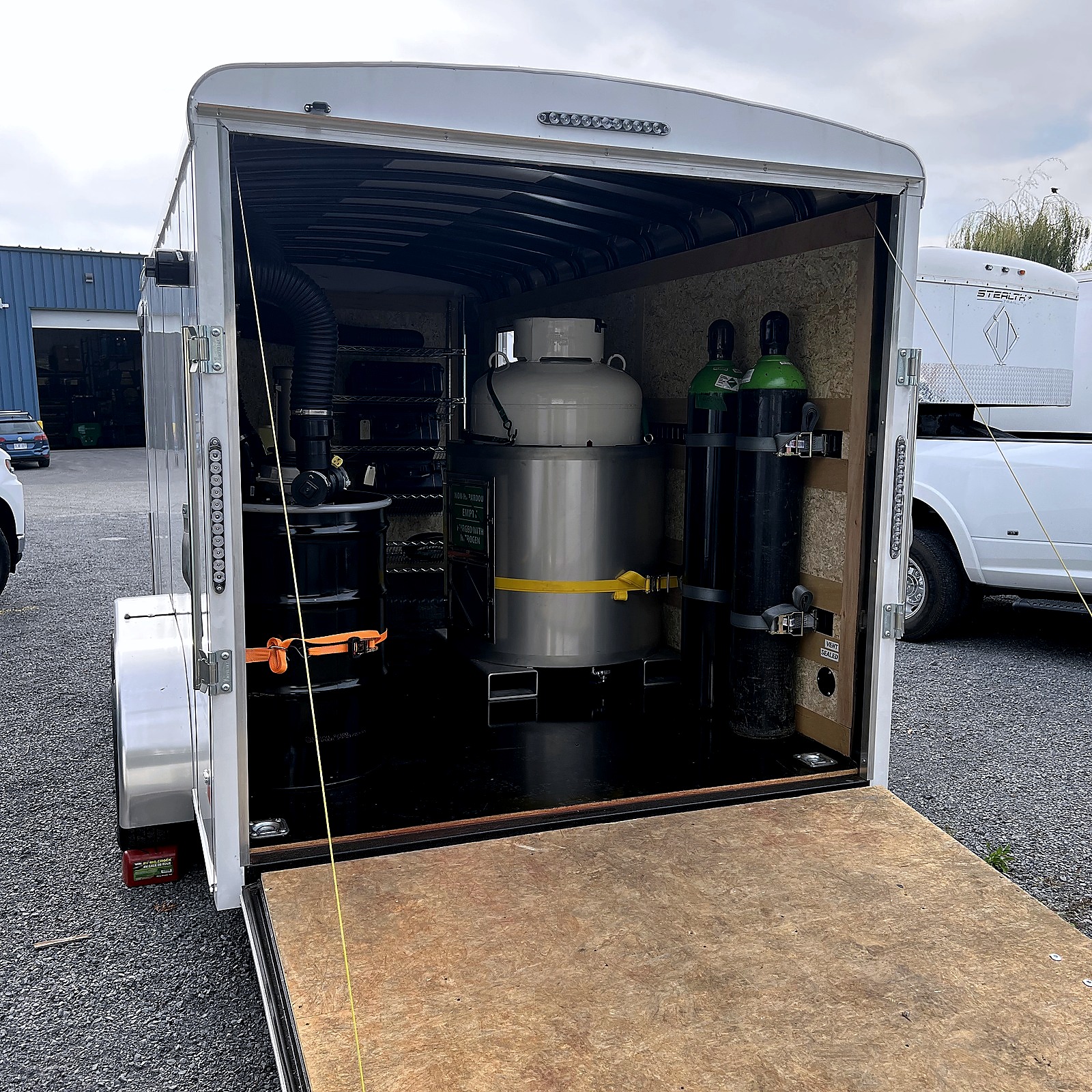
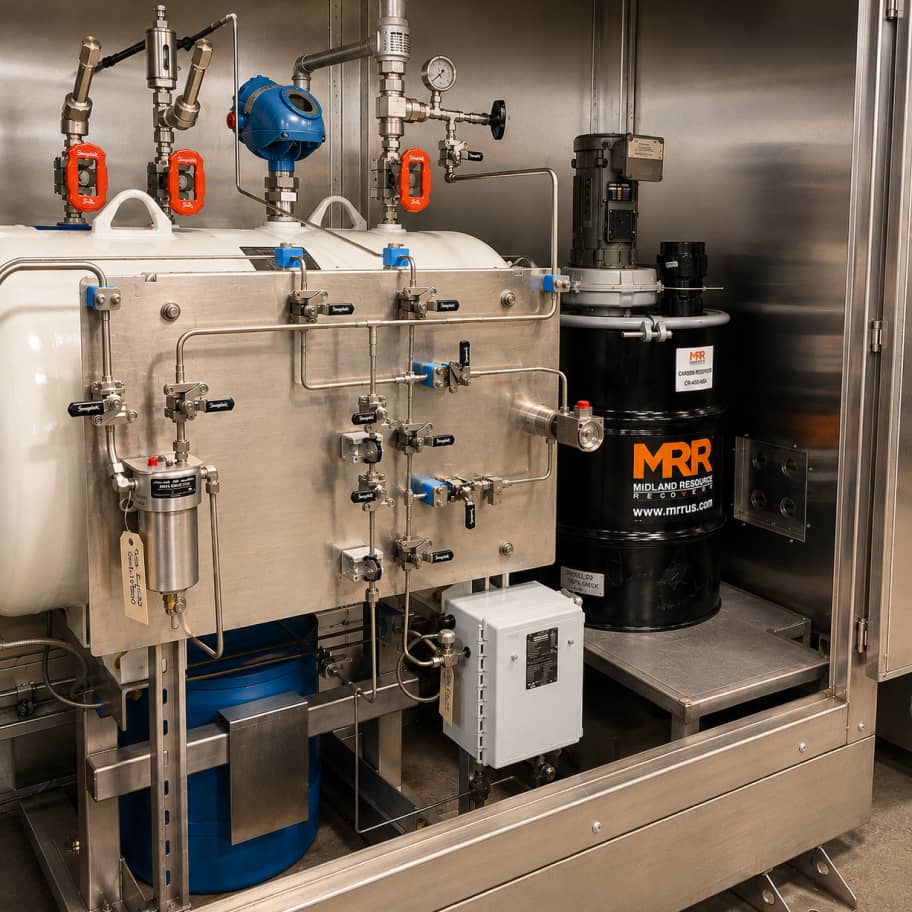
The first phase was the odorant relocation. MRR filter-transferred 1,800 gallons of ethyl mercaptan from the existing 5,000-gallon tank into an MRR bobtail truck, where it was held safely until the new tank was in place. The filter-transfer process removed any contamination accumulated in the tank during service, ensuring the relocated odorant met specification when it entered the new tank.
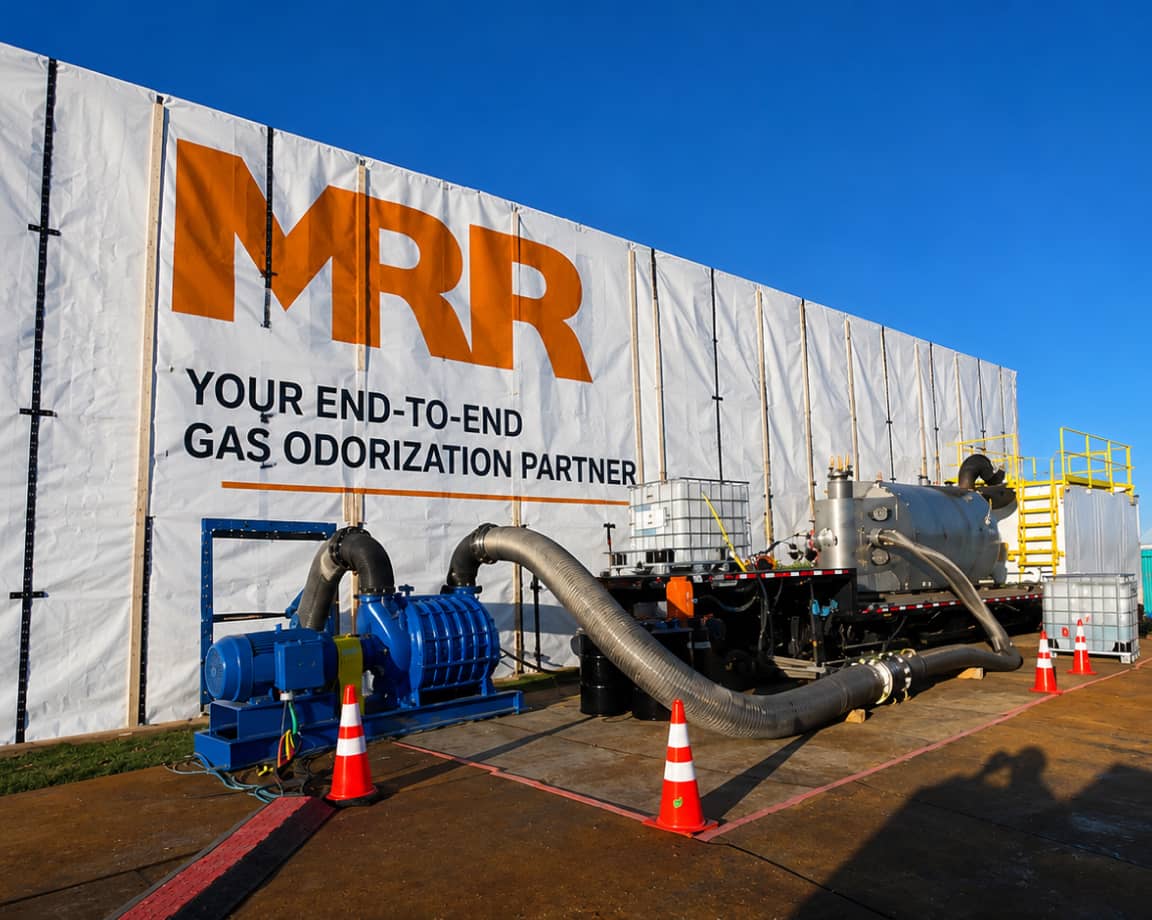
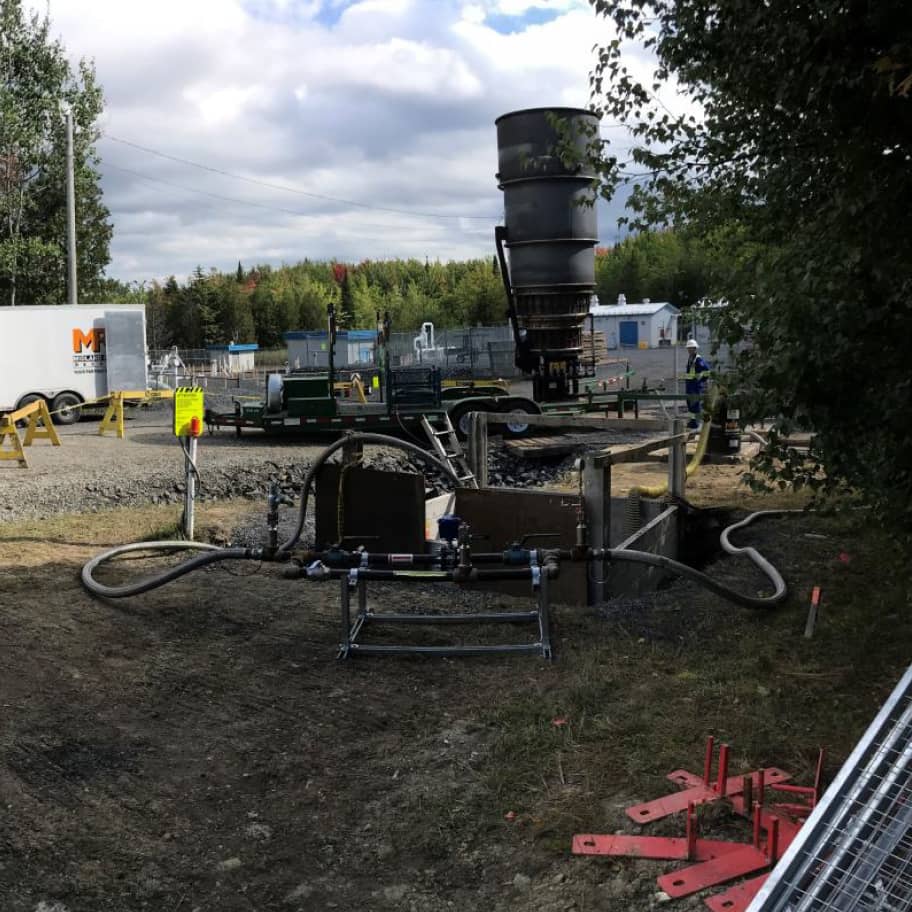
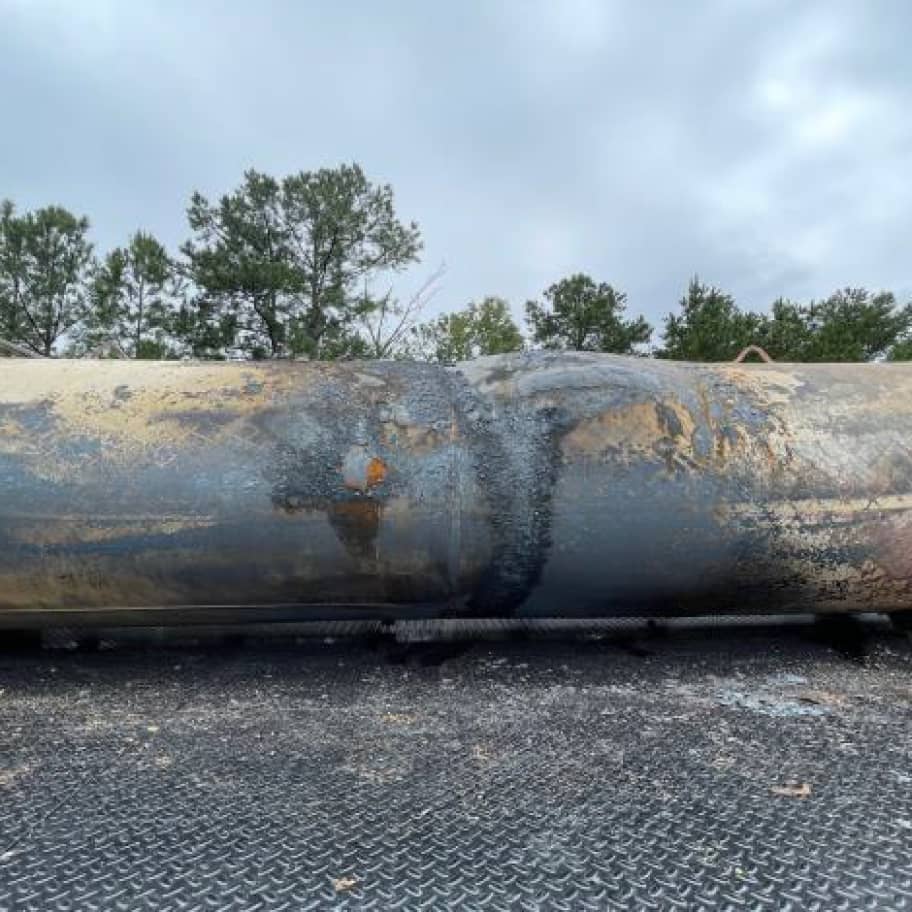
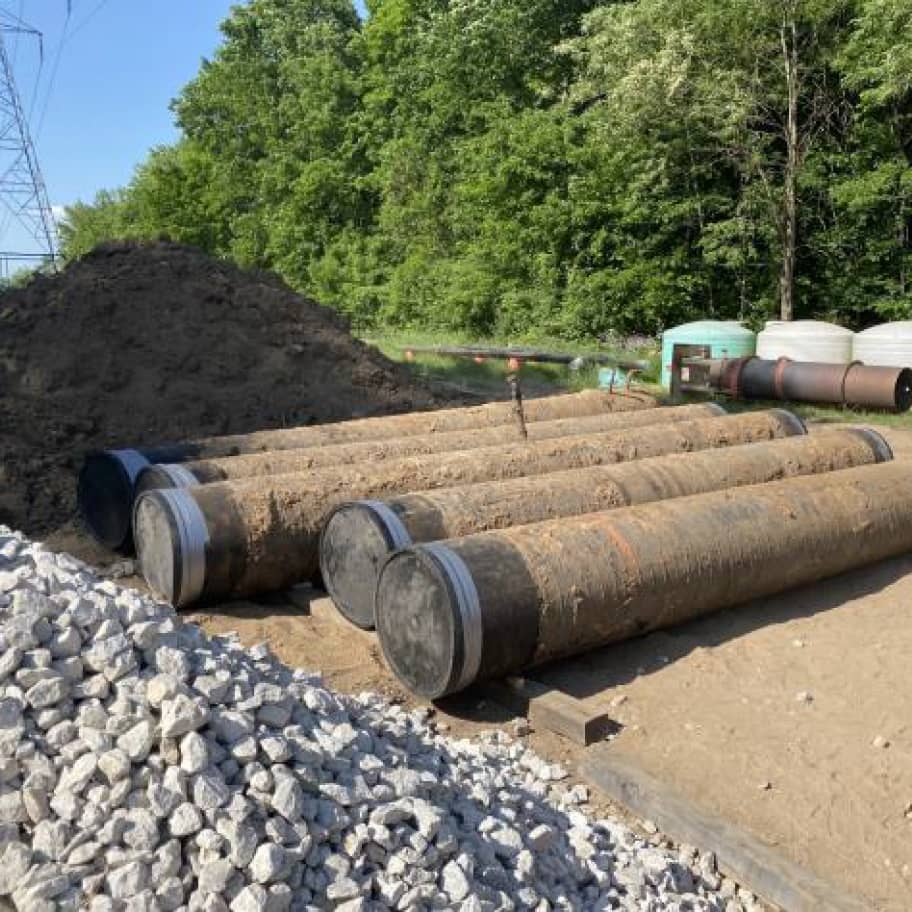
The existing tank was then isolated, drained of any residual material, and prepared for on-site treatment. The associated odorant pumps and connection piping were decommissioned in parallel. The on-site treatment process de-odorized the 5,000-gallon tank to a level that allowed it to be cut into transportable sections for removal to recycling. The work was performed under refinery permitting and safety protocols, with continuous coordination with the operator’s site safety team.
With the old tank cleared, the new 2,500-gallon tank was placed in the existing footprint, leak tested, and purged. The 1,800 gallons of ethyl mercaptan held on the MRR bobtail was transferred into the new tank, which was then commissioned and returned to service.
The full project ran 9 days for the decommissioning crew on site, with an MRR odorant delivery truck dedicated to the project for 8 of those days. The combined timeline reflects the sequencing required to move 1,800 gallons of odorant out of one tank, hold it safely, complete the changeover, and move it back in.
Outcome
The refinery received a new, properly sized, fully commissioned odorant storage tank in the same footprint as the original. The 1,800 gallons of recovered ethyl mercaptan continued in productive use at the refinery rather than being destroyed as waste. The decommissioned tank was processed on site, cut, and removed for recycling under hazmat documentation.
The operator’s project closure included the chain of custody for the recovered odorant, the on-site treatment record for the decommissioned tank, the commissioning records for the new equipment, and the documentation required for the refinery’s regulatory and environmental compliance programs.
Refinery projects sit at the higher end of the operational discipline spectrum. The combination of active site conditions, hazardous service requirements, refinery permitting, and the specific properties of ethyl mercaptan (a commonly used odorant for propane and refined product applications, distinct from natural gas mercaptan) require crews and equipment matched to the environment. The Illinois project is one of several refinery and industrial-site projects MRR has executed across North America.