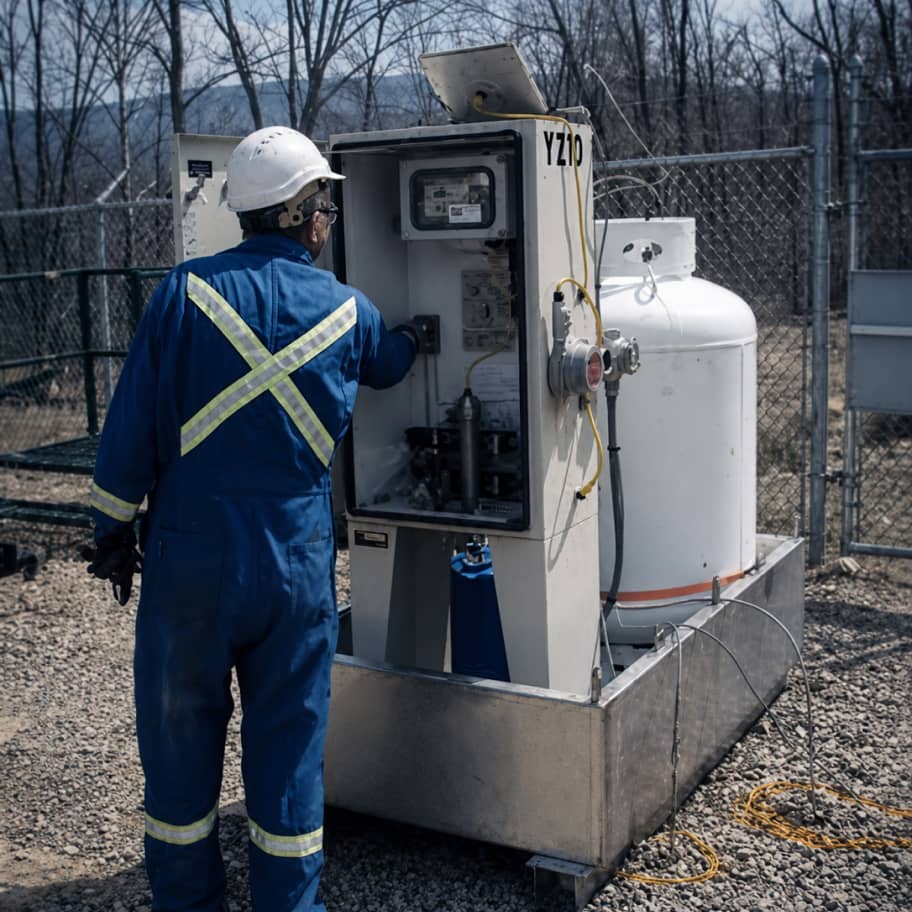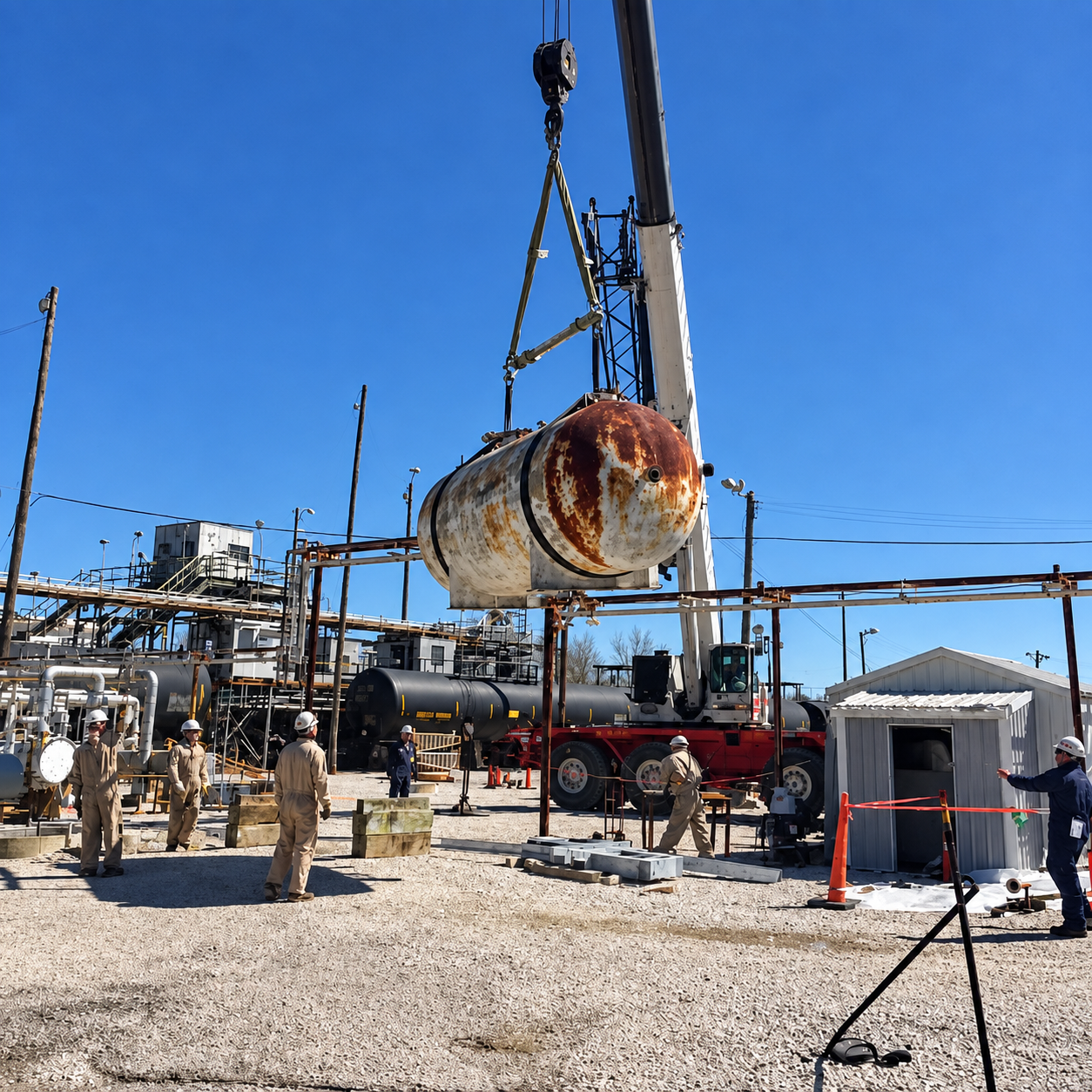
A Canadian natural gas utility identified water contamination in the bulk mercaptan odorant tanks at two of its power generation sites. The odorant at both sites is supplied to a manufacturer cloud point specification of −45°C or colder; water ingress raises cloud point, and once a sample clouds above −45°C the product is off specification. The conventional path for off-spec odorant is to pull it from service, ship it as hazardous waste for incineration, and replace the inventory.
At Site A, 3,200 gallons had drifted to a 0°C cloud point, with roughly half an inch of free water standing at the bottom of the tank. At Site B, 1,600 gallons showed the same 0°C cloud point, with about an inch of free water. Neither volume was a candidate for replacement without real cost and downtime, and both needed a path back to spec rather than disposal.
Approach
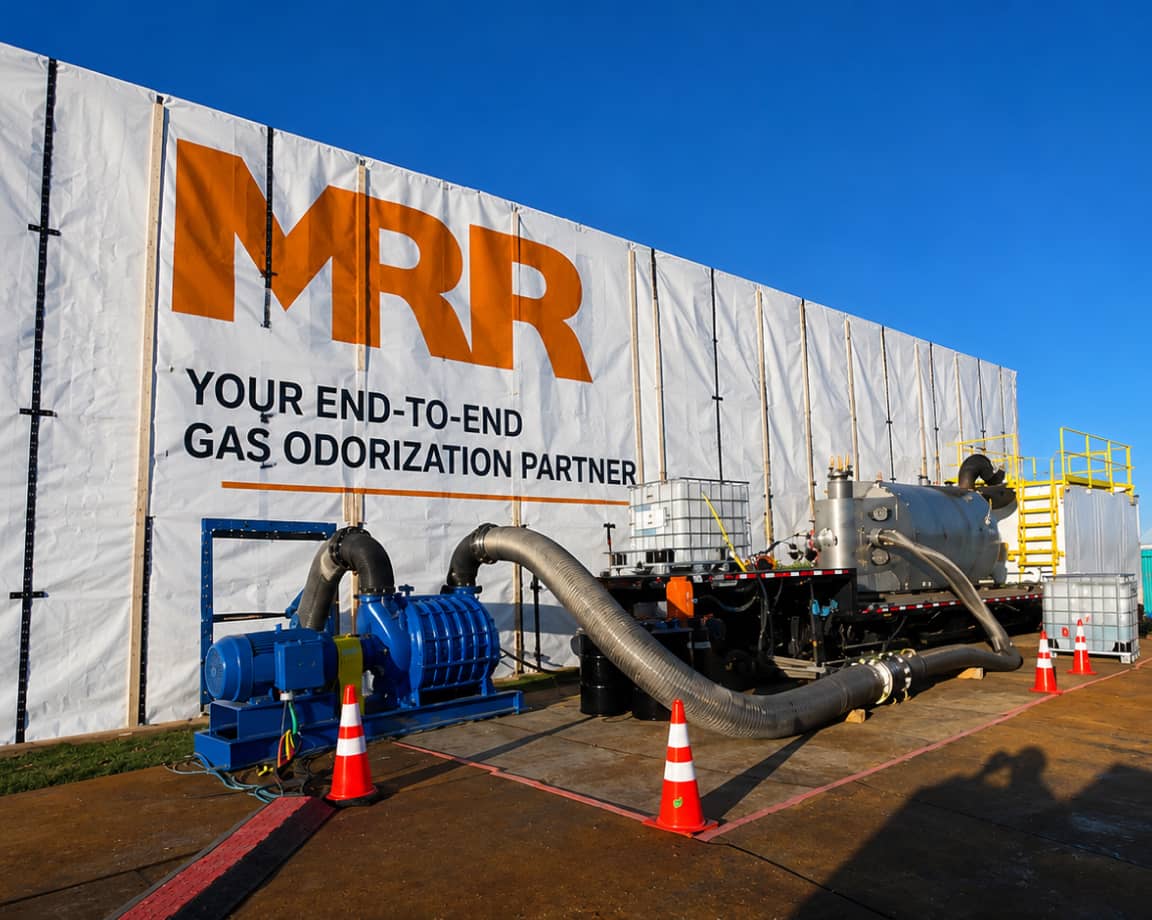
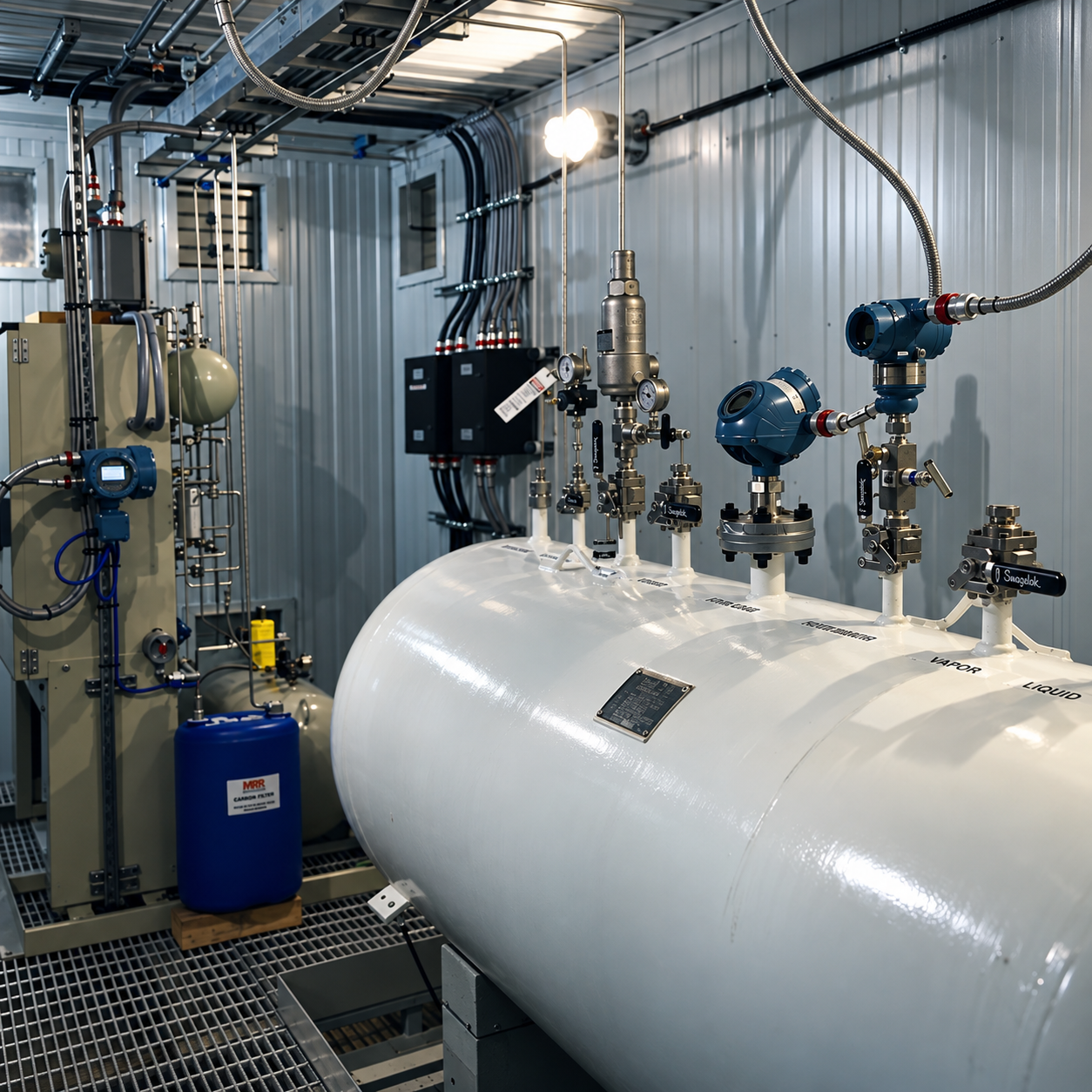
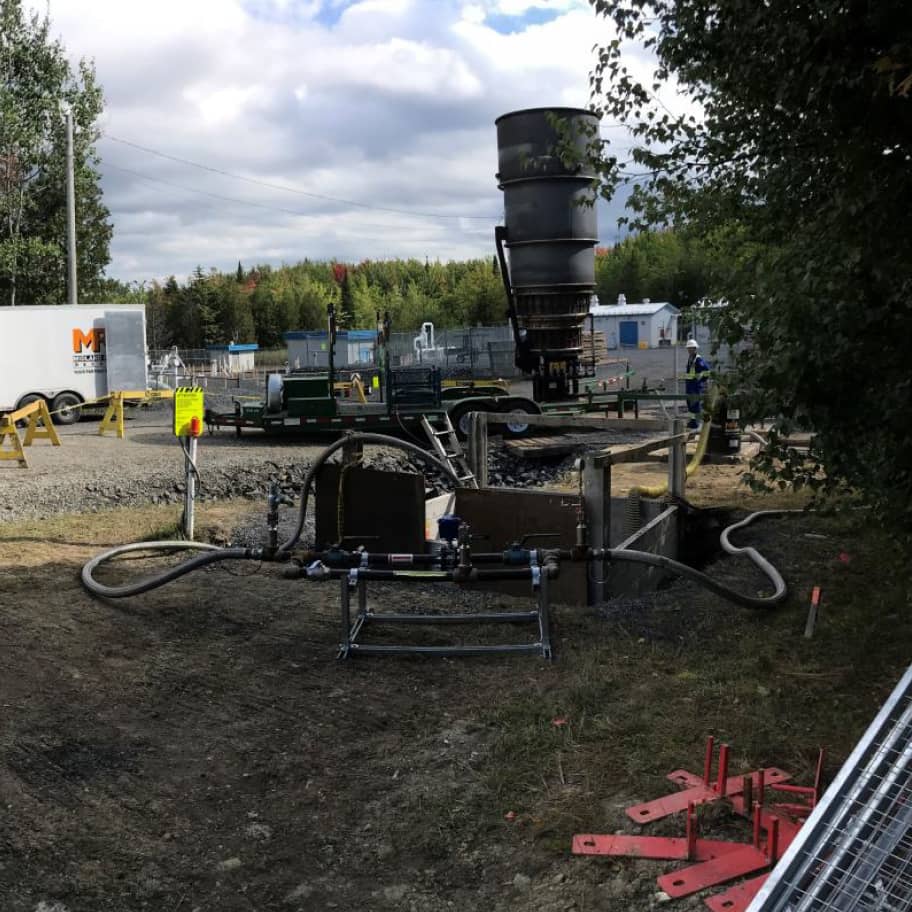
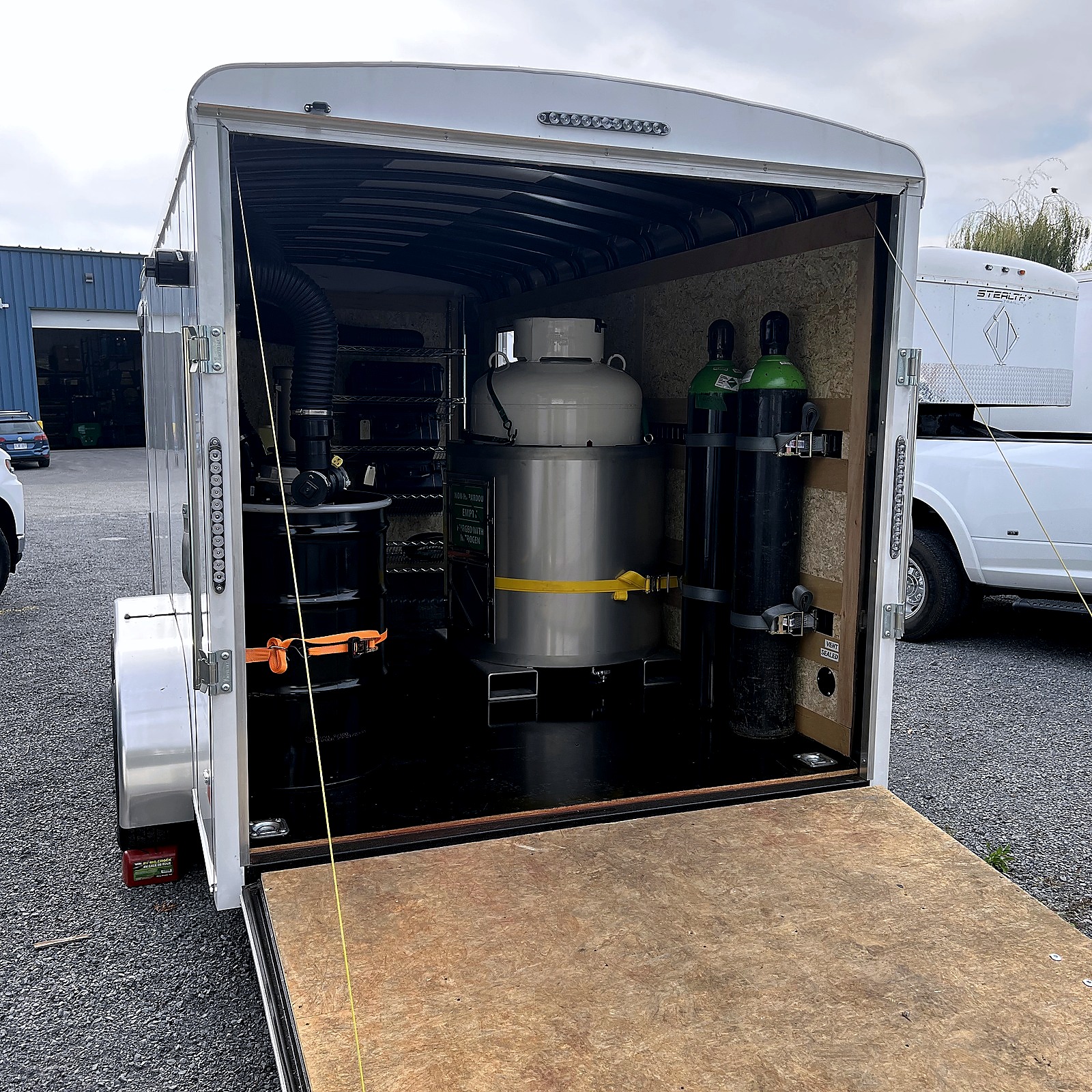
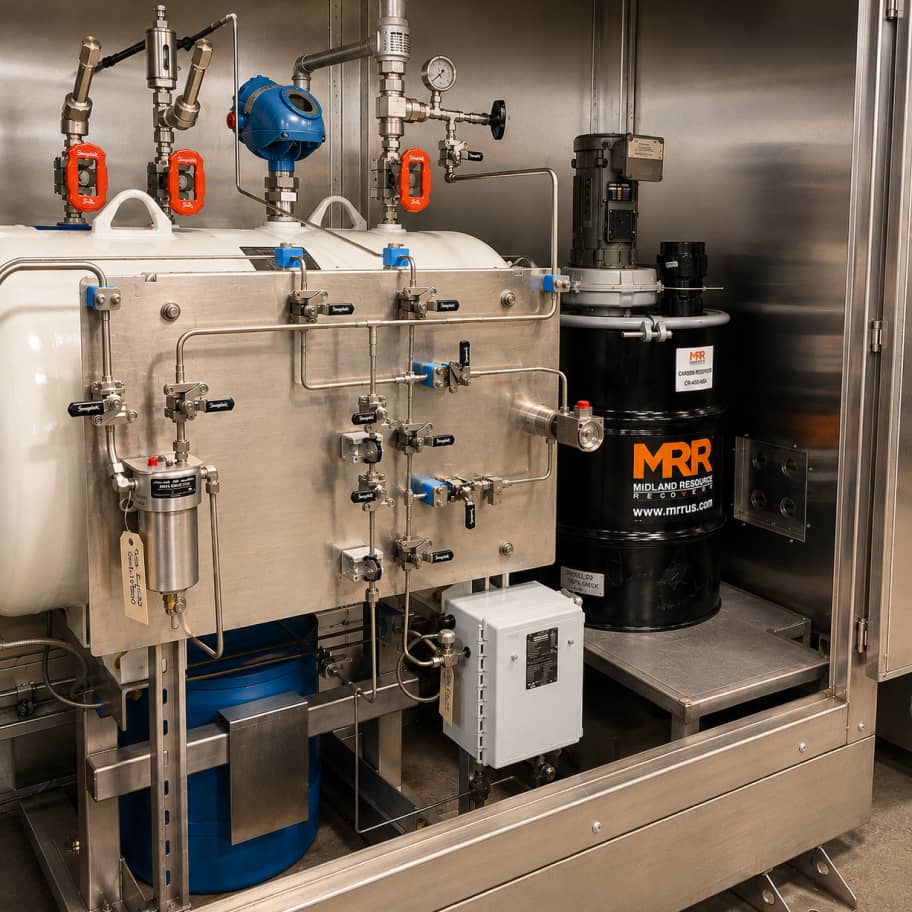
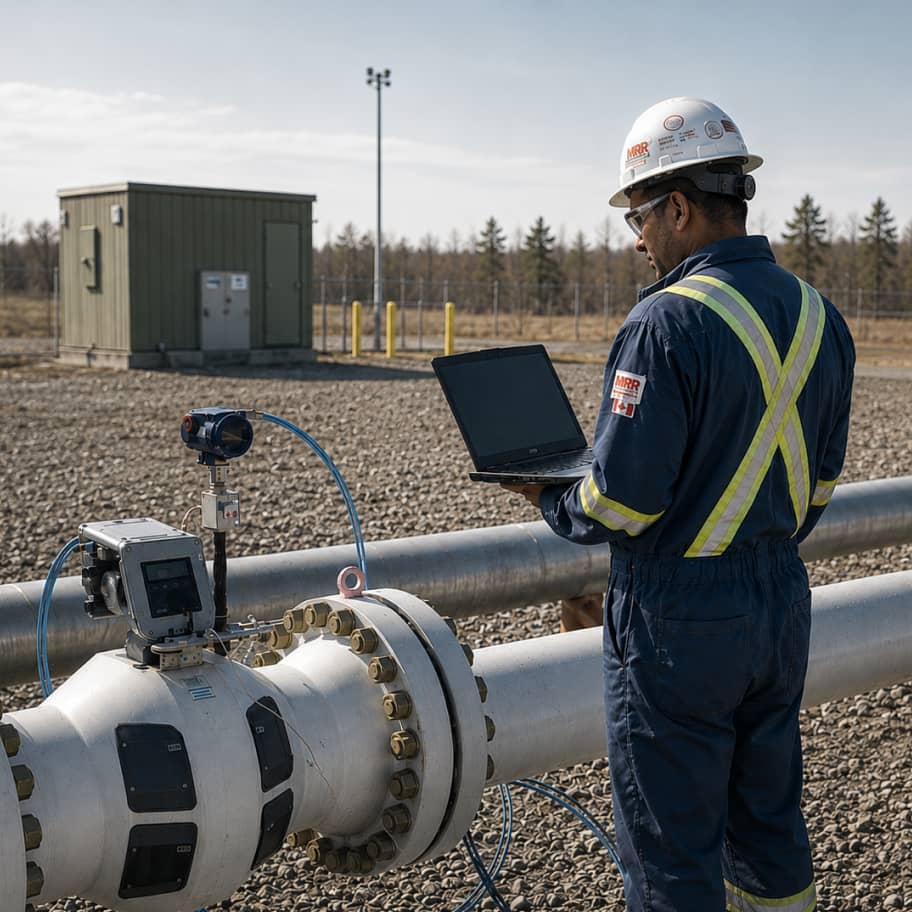
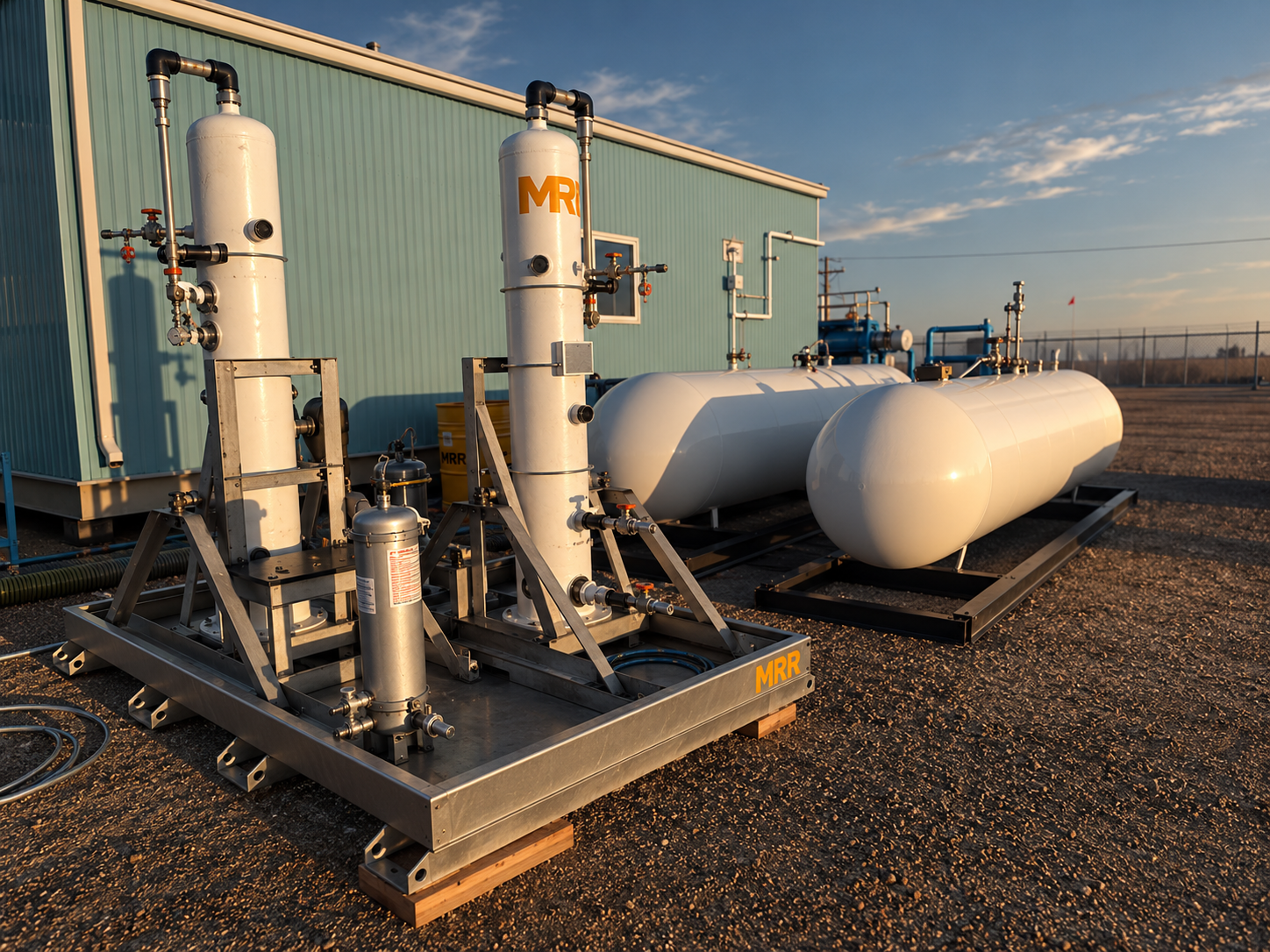
MRR deployed Arida™, its multistage adsorption process for water-contaminated mercaptan odorant, across two site visits in September 2026 - one odorant volume per site, treated independently.
At each site, the contaminated odorant was processed through the Arida system to remove the ingressed water and bring the product back within the manufacturer's cloud point specification. Cloud point was determined before and after treatment per ASTM D2500, the standard method for this measurement, giving a verifiable before/after result rather than a visual or field estimate.
Site A's 3,200 gallons came back to a −47°C cloud point, with roughly 9.0 gallons of water removed. Site B's 1,600 gallons came back to −49°C, with roughly 11.5 gallons removed — in both cases comfortably inside the −45°C limit. The dried odorant was returned directly to each site's bulk tank rather than trucked off site for replacement product, keeping both locations on their existing inventory.
Outcome
Across both sites, MRR dried a combined 4,800 gallons of odorant and returned it to service at a cloud point of −47°C or better. Treating in place rather than disposing and replacing cut the variable cost by an estimated 72%, or roughly $387,000 CAD, based on the service rates and disposal/replacement fees applicable to this project — a comparison that excludes Arida's job-level fixed costs and the methanol tank wash required under either approach.
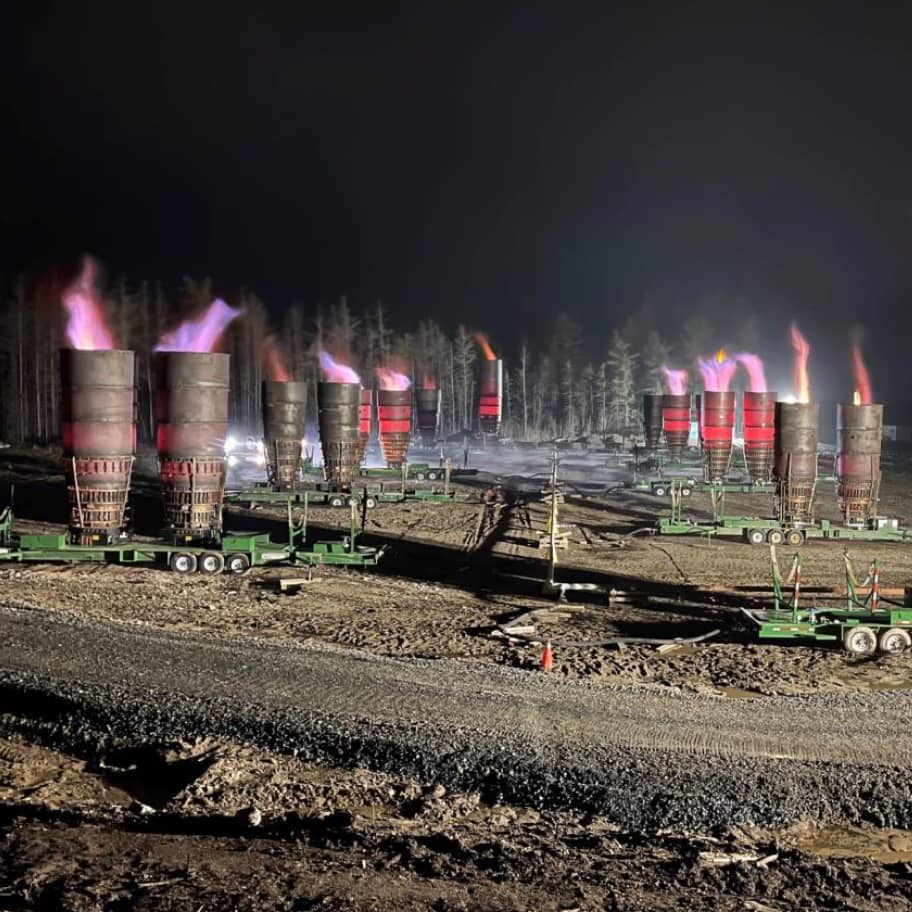
Avoiding incineration of the recovered odorant also kept an estimated 12.0 short tons of sulfur dioxide out of the atmosphere, calculated from the sulfur content of the volume processed assuming complete combustion (manufacturing emissions for replacement product aren't included in that figure).
Water contamination in bulk odorant tanks is a recurring field issue, most often traced to leftover hydrotest water in new tanks, incomplete drying at commissioning, carryover during internal transfers, or a water-based pump flush purged into the bulk tank. Where contamination is caught before extensive dilution, Arida gives operators a way to recover the existing inventory rather than defaulting to disposal — a materially different cost and waste profile than the replace-on-contamination approach the industry has typically relied on.