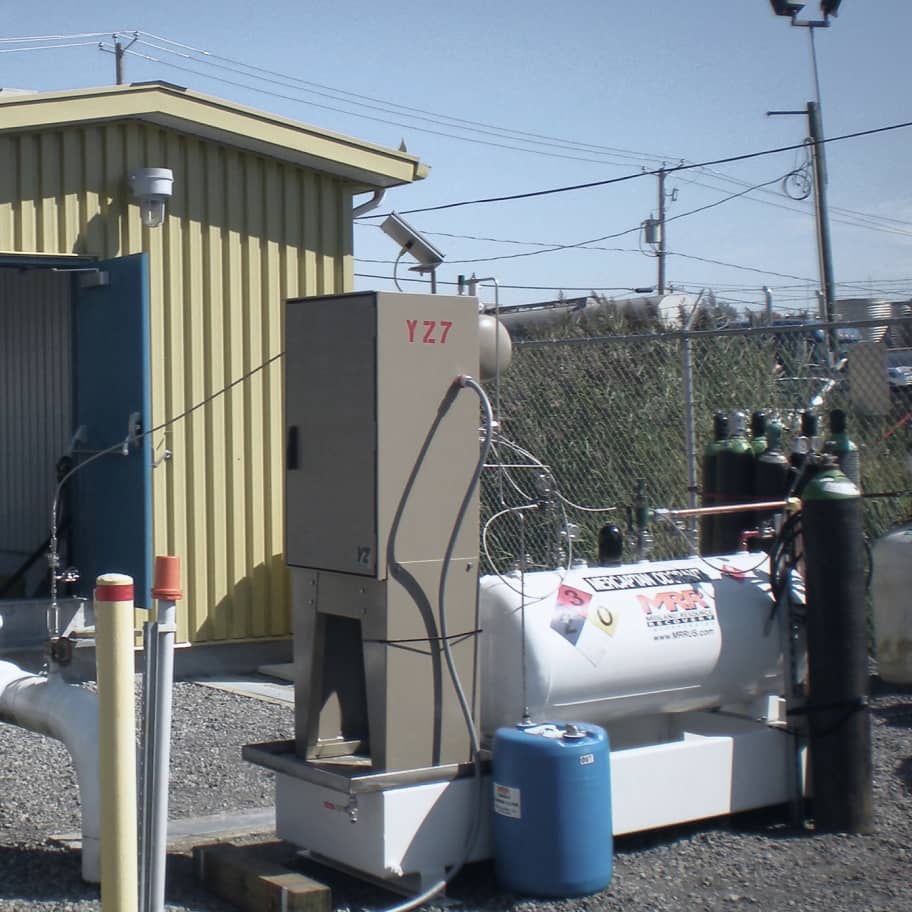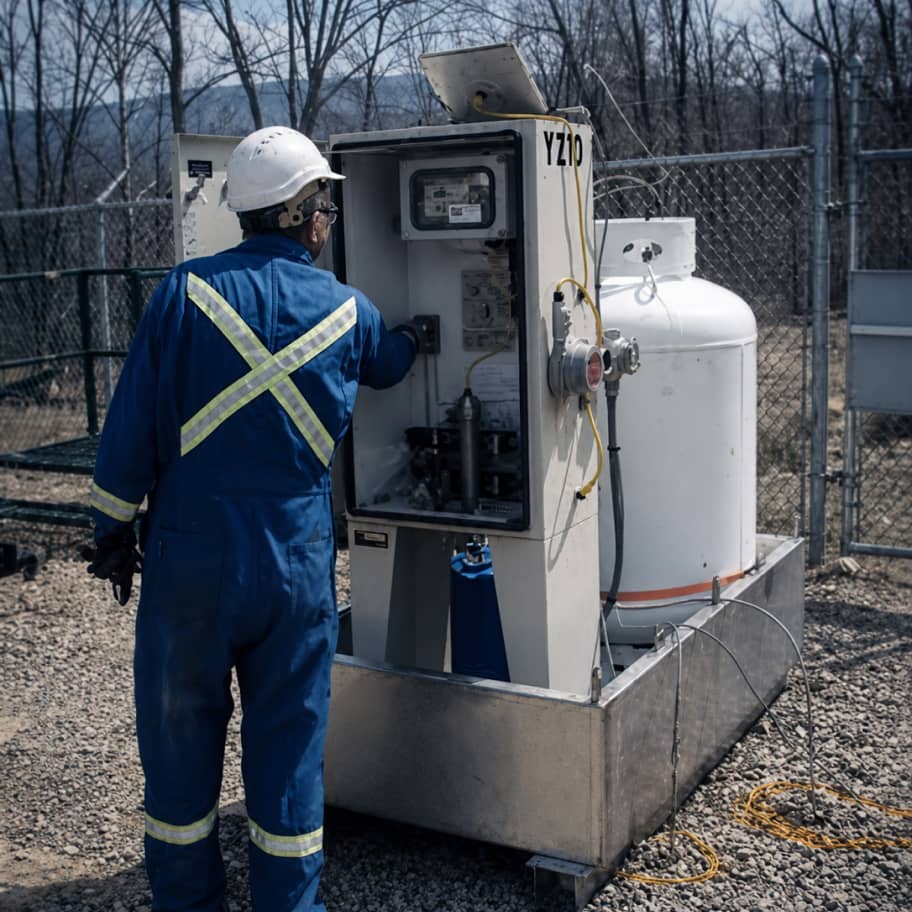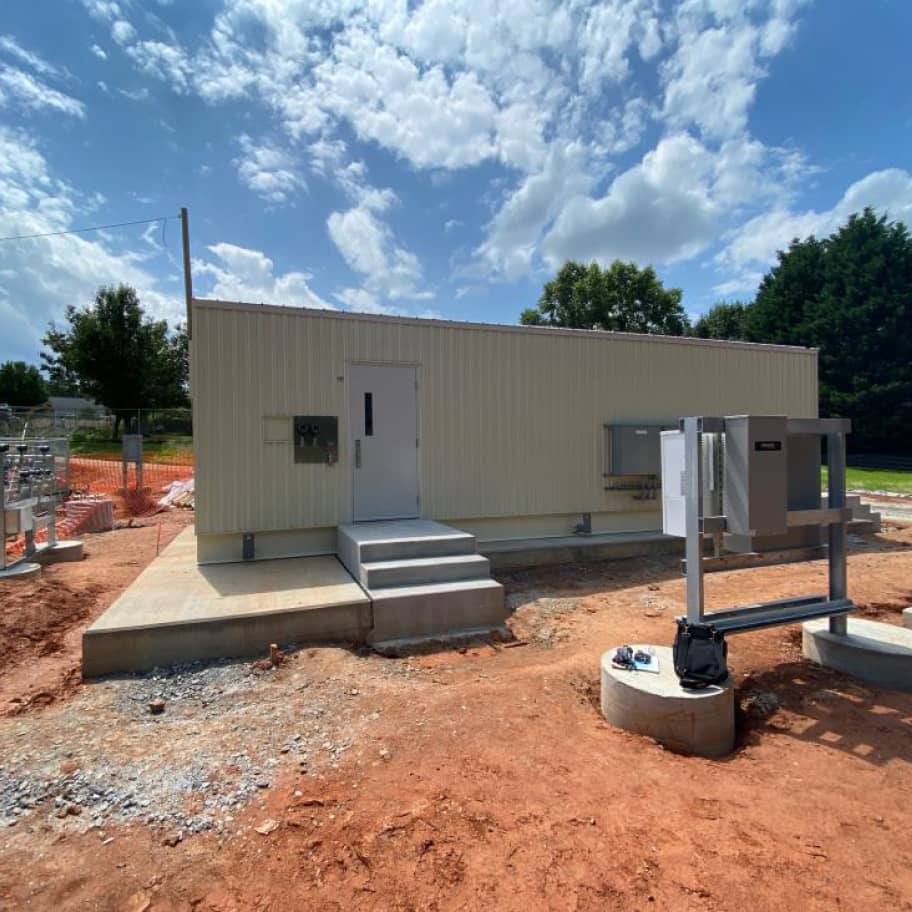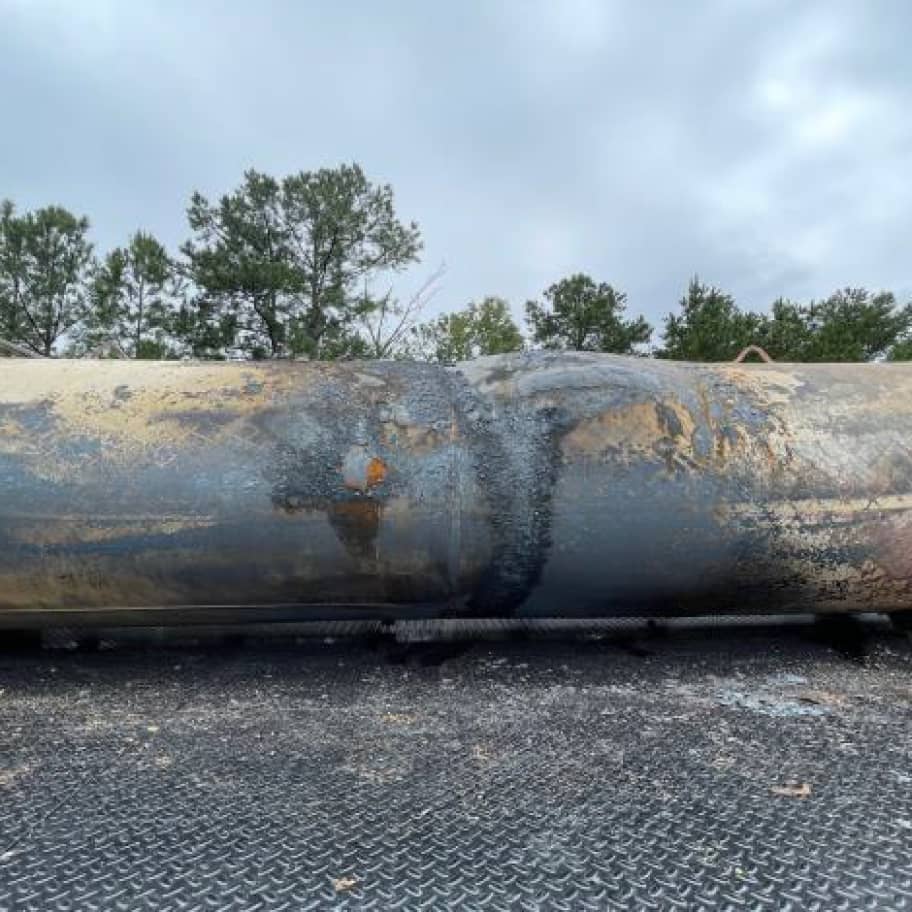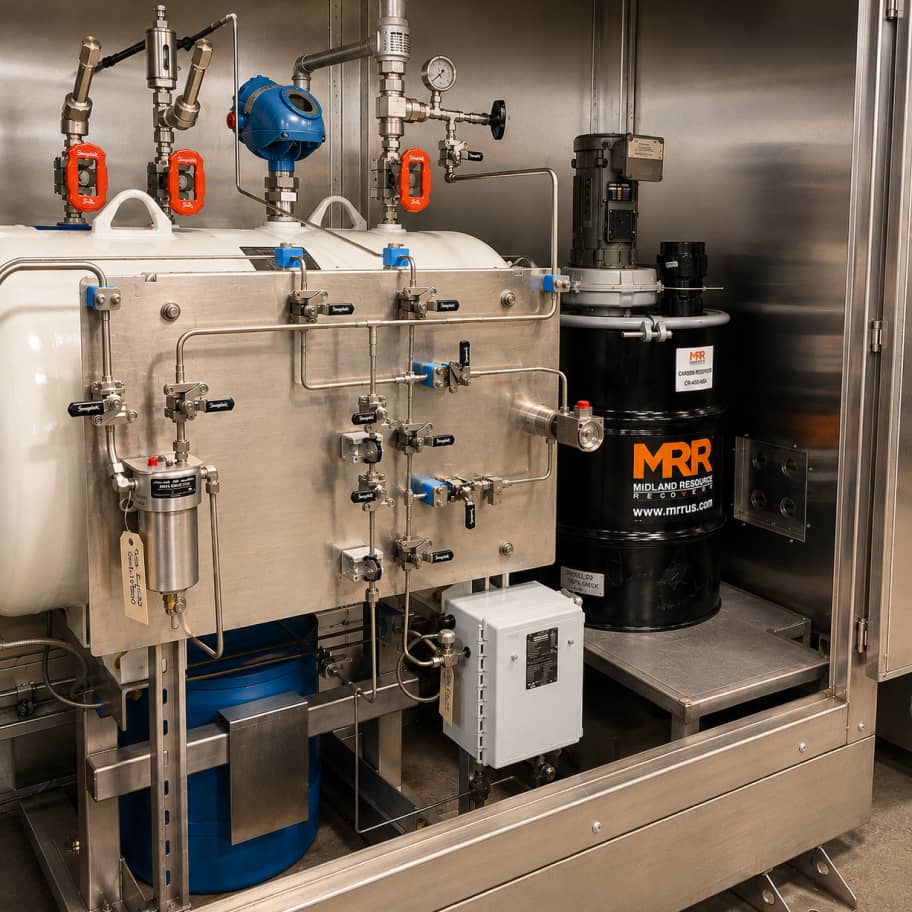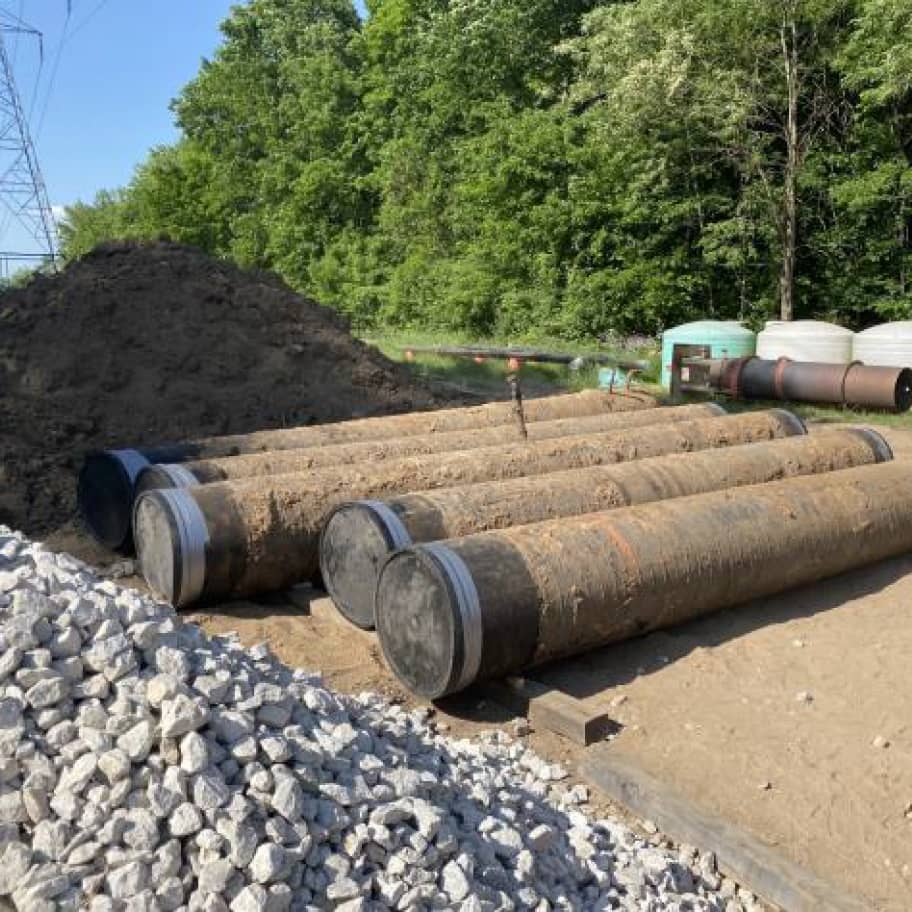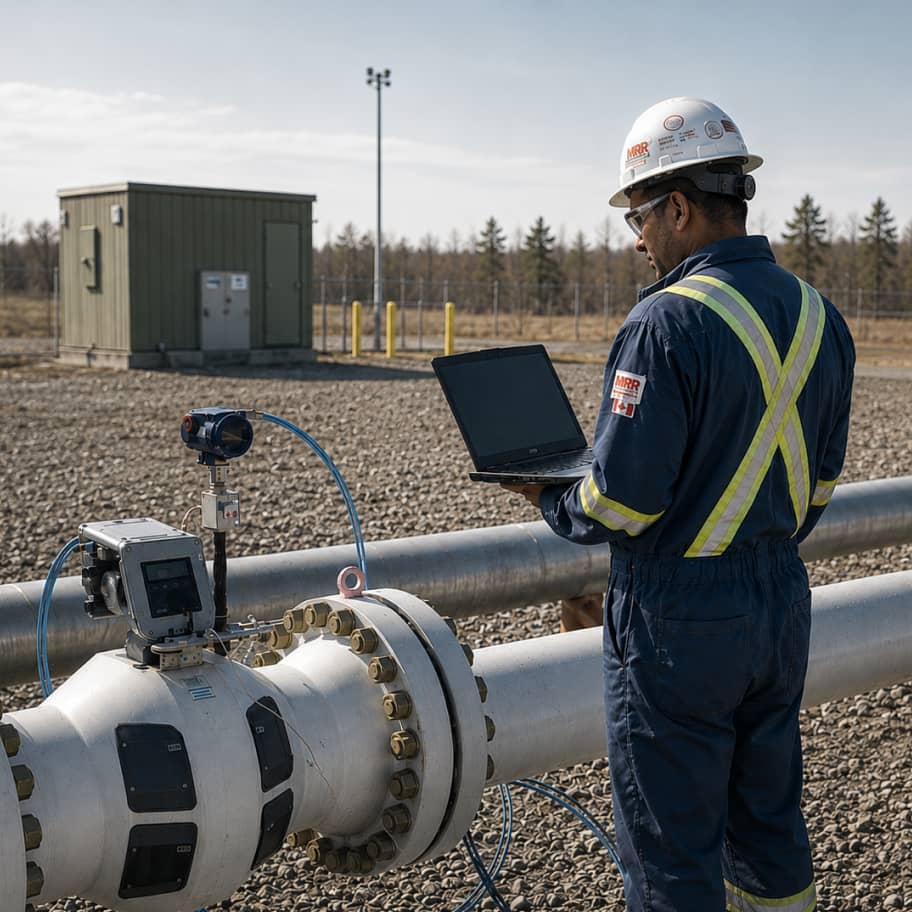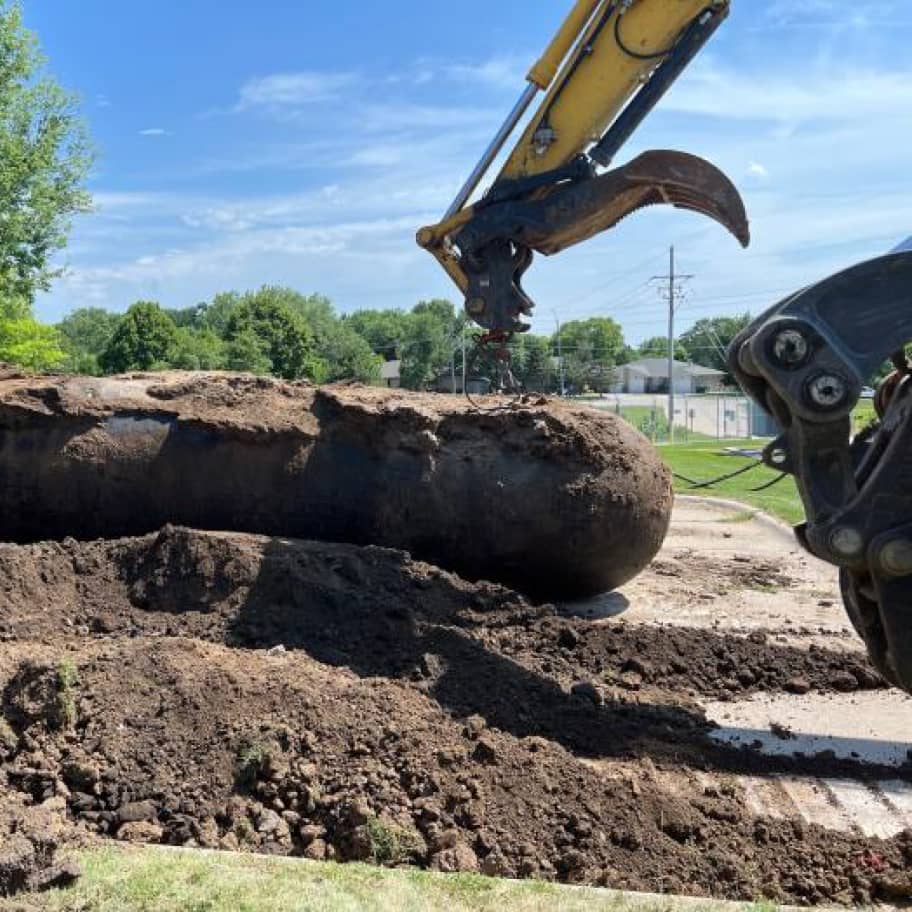
A natural gas distributor in Nebraska had reached the point in its asset planning where four legacy odorization stations needed to be decommissioned together. The scope across the four sites included a 5,000-gallon underground bulk odorant storage tank, a 1,000-gallon underground tank, a 3,000-gallon aboveground tank, multiple smaller tanks ranging from 32 to 150 gallons, and the odorant pumps and associated equipment at each station.
Approximately 2,300 gallons of usable odorant were held across the four sites and needed to be consolidated to a single alternate station so it could continue in productive service rather than being treated as waste. The project required coordination across multiple geographic locations, sequencing that respected the operator’s ongoing distribution requirements, and subcontractor management for the excavation and crane work required at the underground tank sites.
This was not single-station decommissioning. It was a coordinated retirement of a portion of the operator’s fleet, planned and executed as one project.
Approach
MRR organized the project as a multi-site campaign rather than four separate engagements. The planning phase produced a site-by-site scope, a unified equipment and material disposition plan, a consolidated odorant transfer sequence routing 2,300 gallons from four origin sites to a single destination station, and an integrated documentation package that would close the full project at the end.
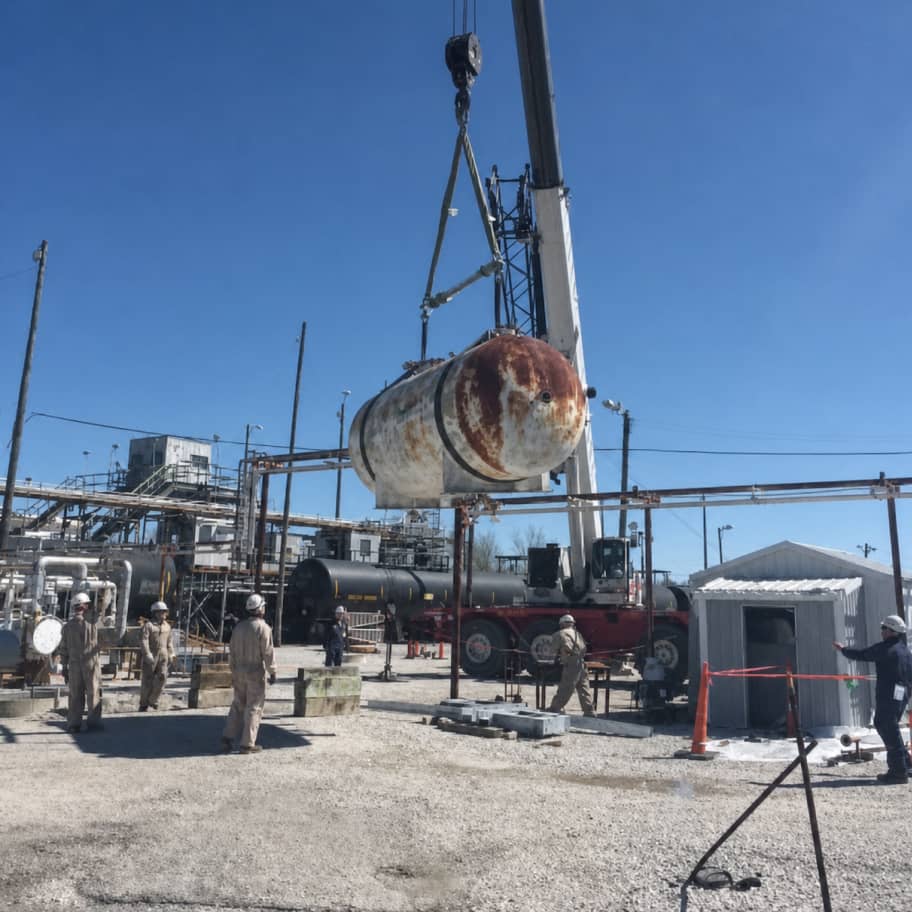
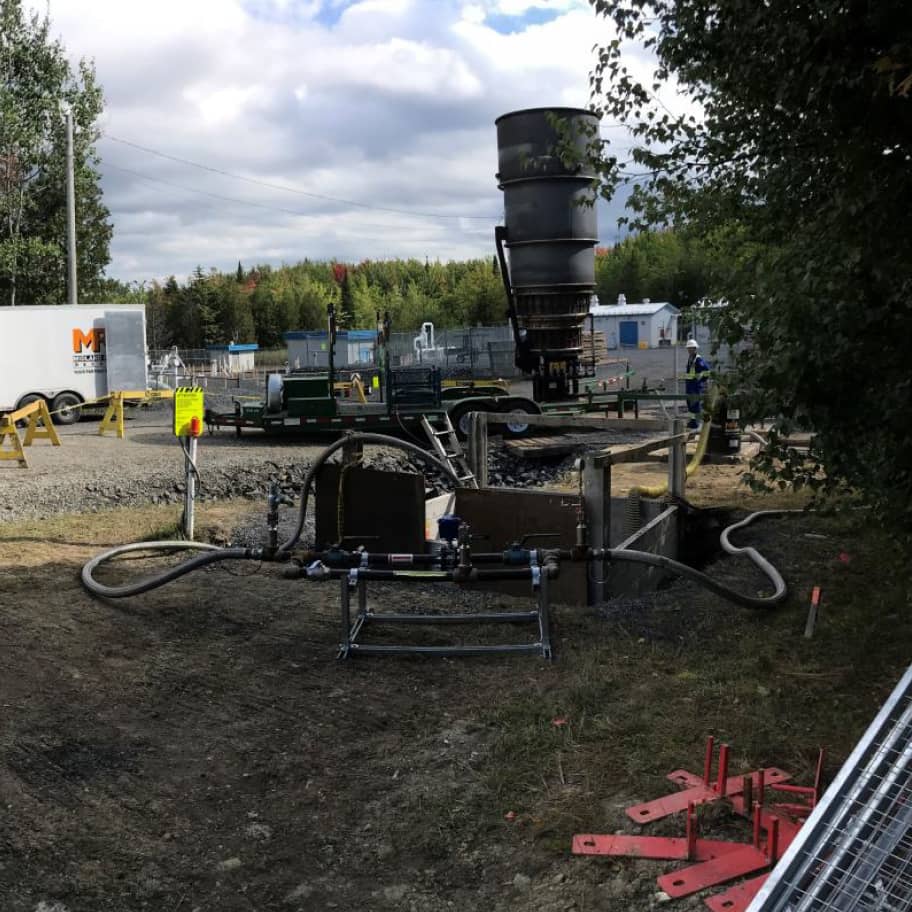
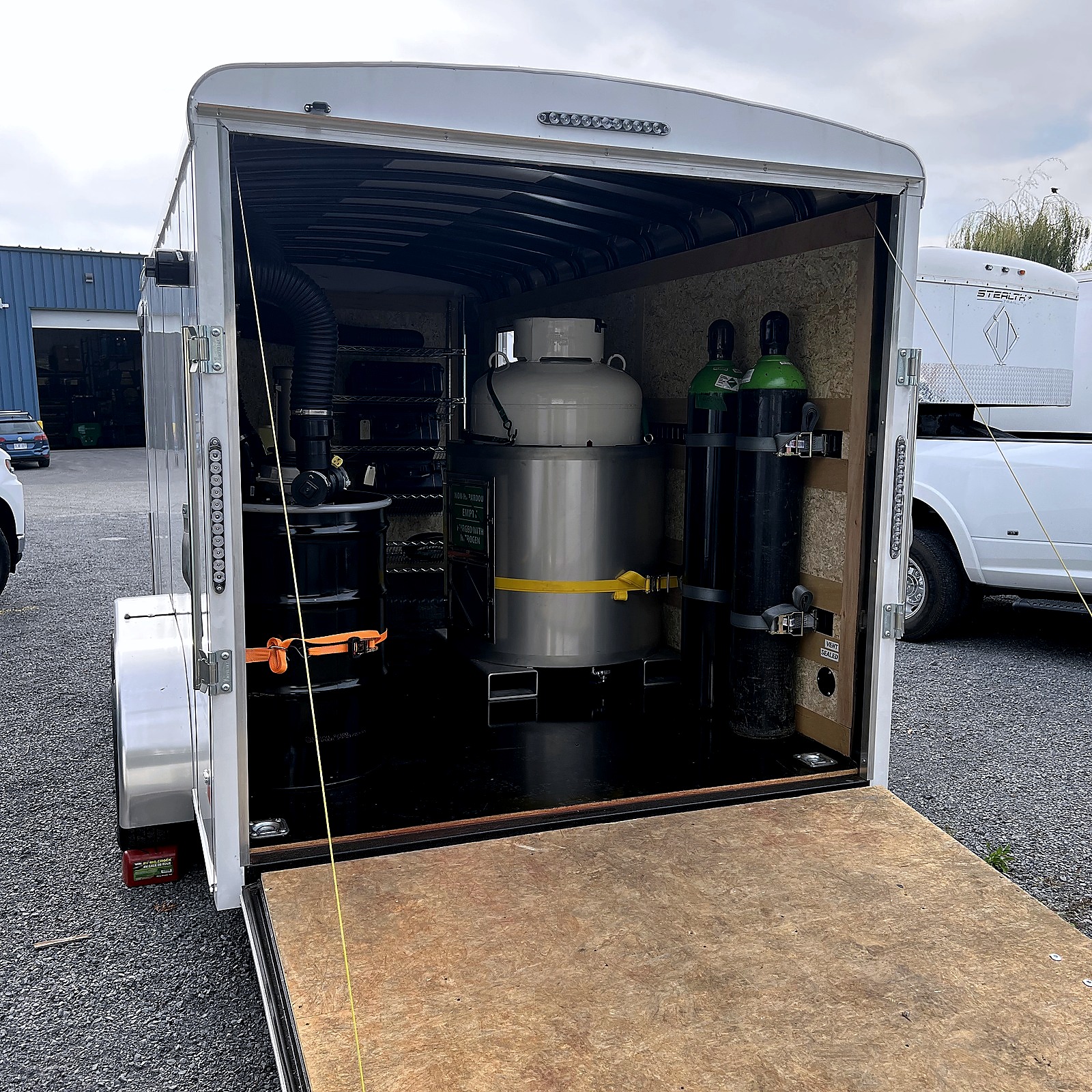
Two MRR field crews operated in parallel across the four sites to compress the on-site duration. MRR contracted a local excavation and crane company as a subcontractor for the digging and lifting work at the underground tank sites, with MRR supervising the subcontractor's work and integrating it into the broader decommissioning sequence. An MRR odorant delivery truck was dedicated to the project for the duration of the on-site work, handling the filter-transfer operations at each origin site and the consolidated delivery to the alternate station.
The underground tanks at each site were exposed by the subcontractor crew, then disconnected, drained, and decommissioned by MRR technicians. The aboveground tanks and smaller equipment were processed in parallel. The contaminated piping at each site was identified, isolated, and removed as part of the station-specific scope.
Outcome
The full fleet retirement was completed with two MRR crews on site for six days and the odorant delivery truck on site for four days. The entire 2,300-gallon volume of recovered odorant was successfully relocated to the alternate utility station, where it continued in productive use rather than being treated as waste material. The decommissioned tanks and equipment were transported to MRR's Philippi plant for off-site treatment and final material disposition.
The operator received a unified closure package covering all four sites, with consistent documentation across the project rather than four separate files. The package supported the operator’s asset records, regulatory closure for each site, and the financial accounting for the asset retirement.
Fleet retirement work tends to cluster — a utility that has one aging station usually has several. The Nebraska campaign was planned as four sites from the start. Operators planning similar work generally save time and budget by scoping the full retirement before any individual site begins.