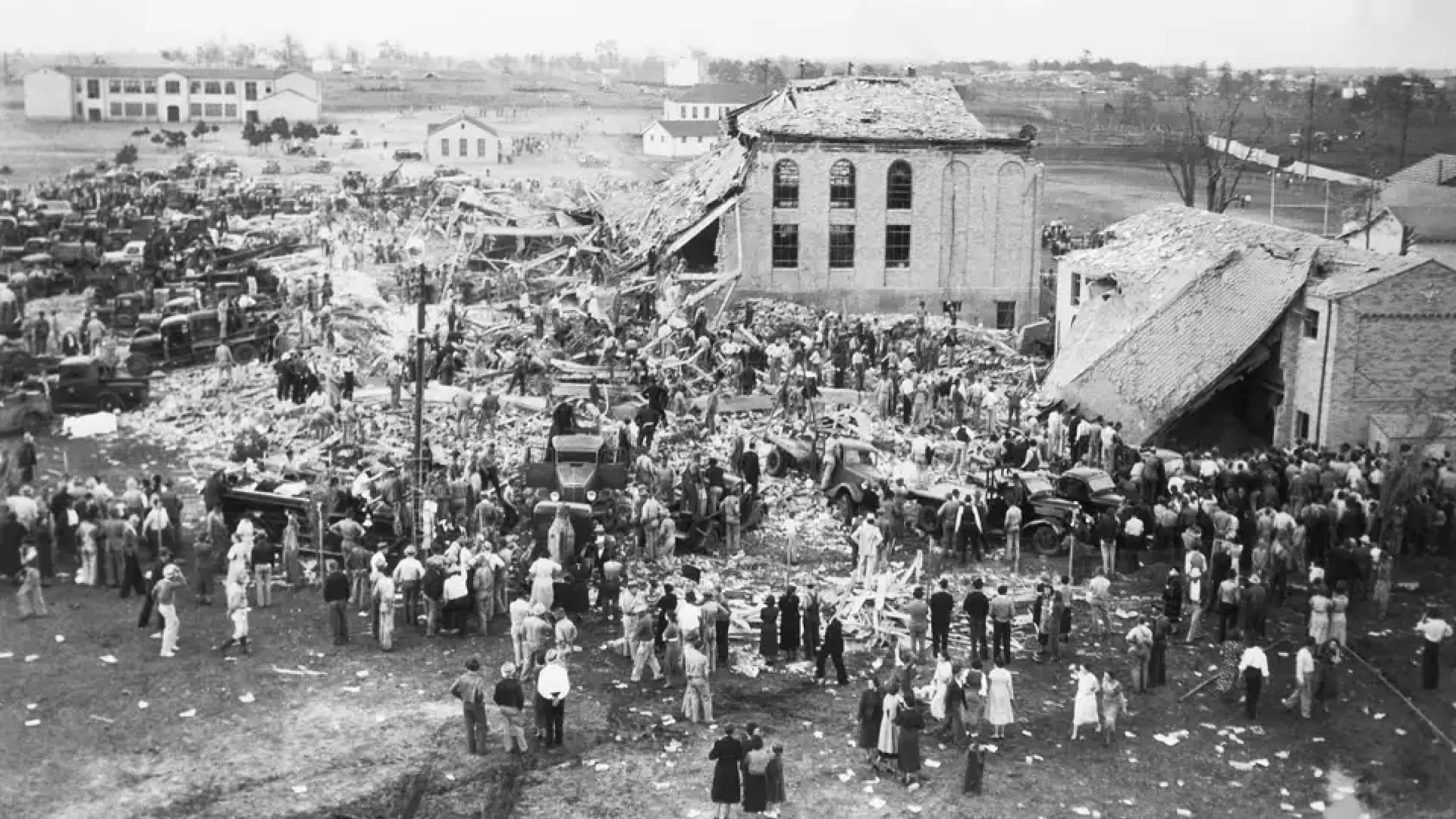
At 3:17 in the afternoon on March 18, 1937, a shop teacher at the London School in New London, Texas, turned on an electric sander. A spark from the sander ignited natural gas that had been quietly accumulating in the building’s crawlspace. The explosion that followed killed close to 300 students and teachers. It remains the deadliest school disaster in United States history.
What is less remembered is what happened in the weeks that followed. By the time the rubble was cleared, the Texas legislature had moved to mandate that combustible gas be made detectable by smell. Within a few years, the practice had spread across the country. Three decades later, that practice became federal regulation under 49 CFR 192.625. This history is documented by the Texas State Historical Association and by the U.S. Bureau of Mines' original investigation, and what was learned at New London helped establish the odorization practice that programs across North America build on today.
This is a working engineer’s view of how that happened and why the regulation reads the way it does.
The school and the gas
The London School was a wealthy school by any measure. It was built in 1932 in the East Texas oil patch, financed by oil money, and outfitted with the best materials of the period. The building sat on sloping ground with a large enclosed crawlspace running beneath the main structure.
The original design called for a central boiler with steam heat. The school board overrode that design and installed 72 individual gas heaters throughout the building instead. The change saved money and added complexity. Each heater was a potential connection point, and the crawlspace beneath the building became an enclosed volume into which any leak would accumulate.
In early 1937, the school cancelled its commercial natural gas contract and tapped directly into a nearby residue gas line operated by the local oil and gas industry. Residue gas, sometimes called casinghead gas or wet gas, was the byproduct of oil production. Operators commonly vented it or flared it. Tapping it for heating was informally tolerated. The gas was untreated, variable in composition, and entirely without odor.
A leak developed somewhere in the school’s gas piping. With no odor and no warning, the gas built up in the crawlspace through the morning and early afternoon. The sander spark ignited it. The roof of the school lifted clear of the walls before falling back into the building. The sound carried for miles.
What the investigation found
The United States Bureau of Mines investigated within days. Their finding was direct: the connection to the residue gas line had been faulty, and the gas had no odor that would have warned the building’s occupants. The Bureau noted that the gas industry had been aware for years that some gases naturally contained sulfur compounds detectable by smell, and that some operators had been adding such compounds voluntarily to manufactured gas. The lesson the Bureau drew was that the practice should not be voluntary.
The state response was fast. The Texas legislature met in a special session and passed legislation requiring that natural gas distributed for consumer use be odorized. Within months, gas companies across Texas began adding mercaptan or similar sulfur compounds to their distribution systems. The practice spread to neighboring states through the late 1930s and 1940s. By the time the United States Department of Transportation took over pipeline regulation in 1968, odorization was already standard industry practice in distribution.
The federal codification came in 1970, as part of the original Part 192 pipeline safety rules. The detectability language that became 49 CFR 192.625(a) — readily detectable at one-fifth of the lower explosive limit, by a person with a normal sense of smell — was written to capture what the industry had been doing for thirty years.
Why the rule reads the way it does
A few features of the modern regulation make more sense in the light of New London. The detectability threshold is calibrated to a margin of safety, not a chemistry target. One-fifth of the lower explosive limit means the gas must be smellable well before the mixture becomes flammable. The number was not derived from a laboratory study of human olfaction. It was derived from the recognition that an occupant needs time to leave a building, and that the warning signal must arrive while the gas is still well below the ignition envelope.
The standard is written around the human nose rather than an instrument. This too is a New London inheritance. The witnesses and survivors of the explosion described an odorless, invisible accumulation. The regulation that emerged was designed to make the same accumulation impossible to ignore. The instrumented measurement of odorant in ppm came later as a compliance tool, but the underlying standard remains anchored to perceptibility by a typical person.
The chemistry constraints under paragraphs (c) and (d) reflect what was learned from early odorization practice. The 2.5 parts per 100 water solubility cap, the combustion product requirements, the prohibition on materials damage: each of these was added because a particular compound had been tried and had revealed a problem in service.
The equipment requirement under paragraph (e), that odorization equipment must introduce odorant without wide variations, addresses the failure mode that New London demonstrated at its most extreme: a system delivering combustible gas without delivering the warning that accompanies it.
The London Museum and the long memory
The town of New London maintains a museum at the site of the explosion. The exhibits are sobering. The school was rebuilt directly behind the destroyed building and is still in operation. The cenotaph in front of it lists the names of the students and teachers who did not survive.
For an industry that runs on standards, codes, and procedures, it is worth remembering occasionally that those standards were not written in conference rooms. They were written in response to specific failures, in specific places, that cost specific people their lives. The reason an inspector wants to see sampling records at a master meter station in 2026 is that a school district in East Texas cancelled a gas contract in 1937 and assumed the gas would be safe without it.
The lineage of the practice
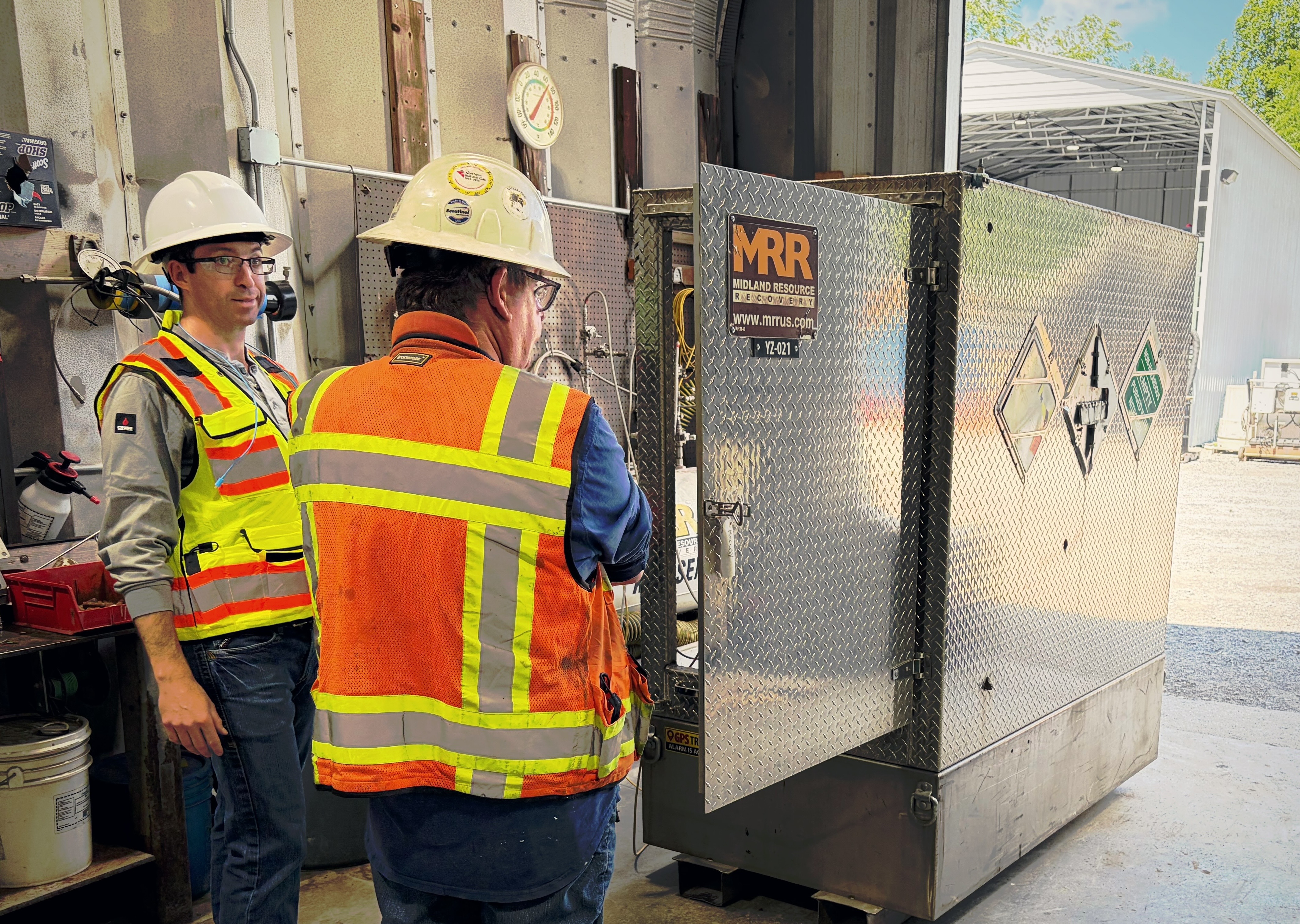
Midland Resource Recovery has worked in odorization since 1996. The work — supplying mercaptan, designing injection systems, conditioning new pipelines, training operators, decommissioning aging equipment, responding to spills — sits inside the practice that New London started. The federal regulation gives the practice its boundaries. The technology has changed. The reason the practice exists has not.
For utility engineers and operators building or rebuilding programs in this space, the regulation is the right place to start reading. The history behind it is the right place to start understanding why the regulation takes the form it does.