Most utilities have a hazardous materials response plan on file. Most of those plans were written by an EHS team working from a template, reviewed annually for compliance, and stored in a binder that nobody opens until something goes wrong. The first time the plan gets stress-tested is during a real incident, which is the wrong time to discover that the plan does not actually fit the operation.
Mercaptan deserves better than a template. The substance has properties that generic hazardous materials planning does not anticipate. The community response to a release is faster and more public than it is for almost any other industrial chemical, because the substance announces its own presence at concentrations far below any health threshold. The compliance baseline is necessary but not sufficient. A working spill response capability requires more.
This article is for the EHS or operations manager building or rebuilding a real plan, not the one that satisfies an auditor.
The compliance baseline
The starting point is the OSHA Hazard Communication Standard at 29 CFR 1910.1200. The standard requires that employees have access to safety data sheets for chemicals in their work area, that they receive training on hazards before they encounter the chemical, and that the training is updated when new hazards are introduced. This is the minimum any program must meet. Depending on the incident and your workplace, this may also implicate HAZWOPER, your emergency action plan, and other requirements beyond HazCom — consult your EHS team.
For odorant operations, the compliance baseline includes a few additional layers. Department of Transportation hazmat training applies to anyone involved in shipping, receiving, or transporting odorant. Emergency Planning and Community Right-to-Know Act (EPCRA) reporting applies wherever threshold quantities of mercaptan are stored. Spill prevention, control, and countermeasure (SPCC) requirements under 40 CFR 112 may apply depending on the volume and location of storage. State and provincial regulations layer on top.
Meeting all of these requirements is necessary. It is also not the same as having a response capability. The compliance documentation tells the regulator what should happen during a release. The response capability is what actually happens during a release.
What a generic plan misses about mercaptan
A spill response plan written from a generic hazardous materials template will get the chemistry roughly right. It will note that mercaptan is flammable, that it has a strong odor, that exposure should be limited, and that releases should be contained. All true. What the generic plan tends to miss are the operational characteristics that make mercaptan responses different from other chemical responses.
The community detects the release before the operator does. Mercaptan is detectable by smell at sub-ppm concentrations. A leak that would be invisible at any other chemical site becomes a flood of phone calls to the local utility, the fire department, and 911 within minutes of release. The response timeline starts with public notification, not with site detection. A plan that assumes the operator will be the first to know the release is happening is built backwards.
The release perception extends far beyond the release area. Mercaptan vapors carry on wind for miles. A small release at a rural injection site can produce odor complaints from communities ten or fifteen miles downwind. The geographic scope of the response — communications, monitoring, reassurance — is much larger than the physical scope of the release.
False alarms and real releases look the same to the public. A vent operation, a routine transfer, a small permitted release, and a serious incident all smell identical at the property line. The public cannot distinguish them. The plan has to address this by having communications channels in place before they are needed, not by trying to explain the difference during a call from a concerned neighbor.
Perceived risk requires as much planning as physical risk. Mercaptan at the concentrations typically encountered in a release is an irritant. Actual health risk depends on the concentration and duration of exposure — check the product SDS and use exposure monitoring to characterize the specific incident rather than assuming a fixed risk level. The perceived risk, particularly in communities that have not been prepared for the possibility, is often high regardless of the actual exposure. If there is any question about exposure or the release is not fully contained, follow the site's emergency plan and contact the appropriate emergency authority. The plan needs to manage both the physical and the perceived response.
Scenarios the plan should address
A working plan covers at least four operational scenarios, each with different response requirements.
Site-level release at a fixed installation. A leak at an odorizer station, a storage tank, a transfer point, or a piping junction. The release is contained to the operator’s property in most cases. Response involves isolation of the source, ventilation, neutralization or absorption of liquid, and air monitoring to confirm the release is contained. Community notification is local: neighbors within smell range. Recovery involves equipment repair or replacement and root cause analysis.
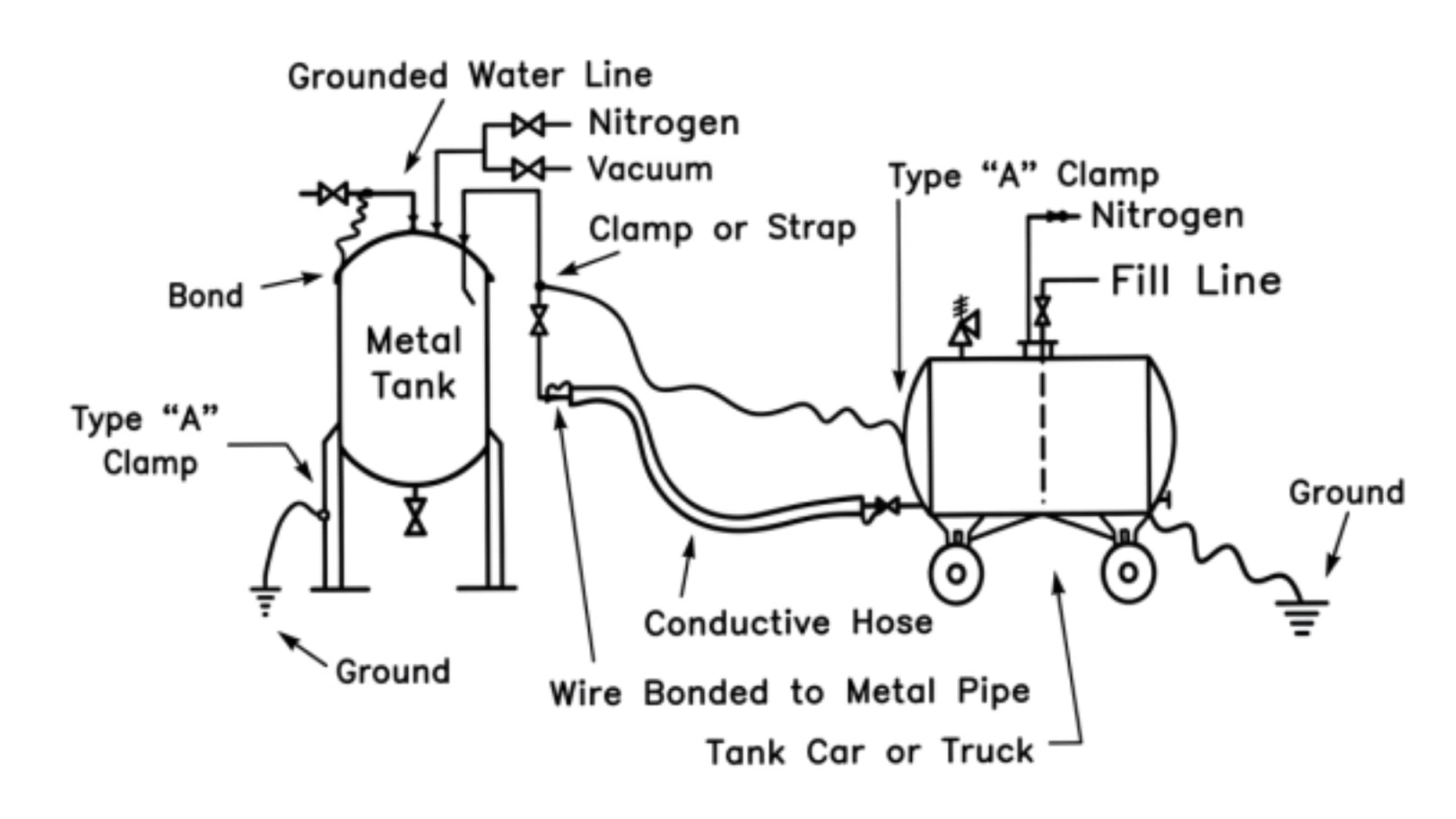
Transfer-level release during delivery or receiving. A leak at a hose connection, a fill point, or during pump operation while a transfer is in progress. The release is usually small in volume but high in initial concentration because the gas is moving under pressure. Response involves immediate isolation of the transfer, securing of the equipment, and assessment of any contamination at the connection points. Most transfer-level releases stop within seconds of isolation. The plan should specify who has authority to halt a transfer and how communication runs between the driver, the receiving operator, and the dispatcher.
Transportation release. A leak from a bobtail truck, a tank trailer, or a smaller delivery vehicle while in transit. The release can occur anywhere along the route, often in locations without site infrastructure or trained personnel nearby. Response requires coordination with emergency responders unfamiliar with the substance, traffic control on the affected route, and often community evacuation downwind of the release point. The transport plan needs to cover the route, the response contacts along the route, and the equipment and material the driver carries to manage a small release at the source.
Catastrophic release at a fixed installation. A complete failure of containment: tank rupture, major piping failure, fire involvement. These events are rare but they are the events the plan exists for. Response involves all of the above plus mutual aid from neighboring operators, regulatory notification within tight timeframes, and structured community communications managed in coordination with local emergency management. The plan should specify the notification thresholds and the call list, with current contact information for each entry.
Most operators will never face the fourth scenario. The first three happen, in small forms, more often than the plan documentation suggests. A plan that addresses all four prepares the operator for the routine events and for the rare ones.
Tabletop exercises and where they reveal gaps
A plan that has never been tested is not a plan. Tabletop exercises — structured walk-throughs of a hypothetical incident with the response team in a room together — are the cheapest, fastest way to surface the gaps in a plan before they surface in reality.
The gaps that show up most often:
- Contact lists that are out of date. The emergency phone number for the local fire chief is from three retirements ago. The regulatory contact has moved to another agency. The mutual aid partner has been acquired.
- Decision authority that is unclear. Multiple people think someone else has authority to halt a transfer or to initiate community notification. The first hour of an incident is spent figuring out who decides.
- Communications channels that depend on infrastructure that fails. The plan calls for a conference bridge that nobody has tested in two years. The radio frequency is wrong. The mass notification system requires a password that the on-call manager does not have.
- Roles assigned to positions that no longer exist. The plan assigns a critical role to a position that was reorganized out of existence in last year’s restructure.
- Coordination with local emergency response that has not happened. The local fire department has never been briefed on the site, the substance, or what to do when they arrive. The first time they encounter mercaptan is at the gate during an actual response.
Each of these gaps is fixable in an afternoon when discovered in a tabletop. Each is much more expensive to discover during a real incident.
A meaningful tabletop runs every twelve to eighteen months. It is led by someone who was not involved in writing the plan, because the author is too close to the work to spot the gaps. It involves operations, EHS, communications, and at least one external participant: a fire department liaison, a mutual aid contact, or a regulator. It produces an action list at the end and a follow-up review six months later to confirm the actions were taken.
MRR’s spill prevention training
Midland Resource Recovery delivers spill prevention training tailored to each customer’s operation. The training is built around the operational scenarios above and around the customer’s specific equipment, sites, and community context. Topics covered include:
- The chemical and physical properties of odorants and what they mean operationally
- Human health effects, exposure limits, and the distinction between detection thresholds and harm thresholds
- Overview of odorization systems and where releases occur
- Odorant transport and handling protocols
- Causes of odorant spills and the failure modes that precede them
- Spill response procedures at the site, transfer, and transportation levels
- Case scenarios drawn from real incidents in the industry
- Documentation requirements and post-incident review
The training meets the OSHA Hazard Communication Standard for affected employees and is sized to the operator’s actual work. A small utility with one storage site and two transfer events per year does not need the same training program as a midstream company with twenty injection points and continuous transfer operations.
For utility operators, midstream companies, and RNG producers building a response capability rather than a compliance file, the training is the foundation. The plan documentation follows from it. So do the tabletop exercise and the operational readiness that the plan is supposed to produce.
The conversation starts with the customer’s operation, not with the training catalog.