Usually, yes. But when and where renewable natural gas needs to be odorized depends on how the RNG is being transported, where it is being delivered, and the requirements of the receiving system.
For RNG developers, landfill operators, agricultural digesters, utilities and pipeline operators, that distinction matters.
RNG may leave a production facility by direct pipeline connection. It may be compressed into a CNG tube trailer and transported hundreds of miles. It may enter a local natural gas distribution system, a transmission pipeline, a CNG fueling system or an industrial process.
Each route can create a different odorization requirement.
The simplest rule is this: RNG does not receive an exemption from natural gas odorization requirements simply because the methane is renewable. Once biogas has been upgraded into usable biomethane or RNG, the odorization requirement generally follows where the gas is going and how it will be used.
What is RNG?
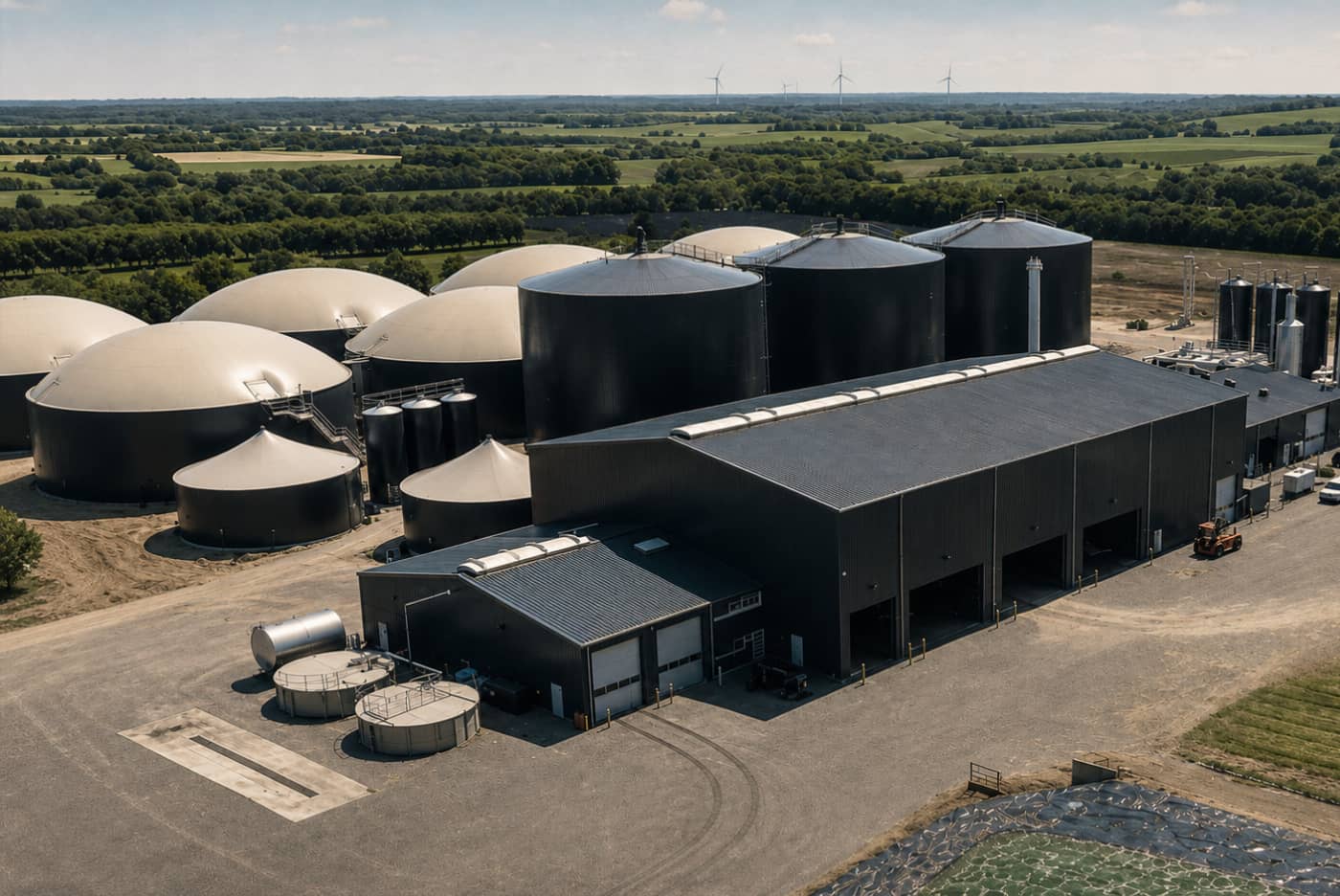
Renewable natural gas is methane-rich gas produced from organic material and upgraded so it can replace conventional natural gas.
Common sources include:
– landfills
– dairy and livestock digesters
– food-waste and organics facilities
– wastewater treatment plants
– industrial wastewater
– municipal anaerobic digestion facilities
The raw biogas from these sources can contain carbon dioxide, hydrogen sulfide, moisture, siloxanes and other contaminants. It is cleaned and upgraded before becoming commercial-quality RNG.
Once upgraded, the source of the methane usually has much less to do with the odorization requirement than what happens to the gas next. A landfill RNG project and a dairy-farm RNG project, for example, can face essentially the same odorization requirement if both are delivering gas into the same type of distribution system.
Why is RNG odorized?
Methane does not naturally provide a reliable warning odor. Odorants are therefore deliberately added to natural gas so a leak can be detected by smell before the gas reaches a dangerous concentration.
Across much of North America, a fundamental safety benchmark is that gas should be readily detectable by a person with a normal sense of smell at approximately one-fifth, or 20%, of its lower explosive or flammability limit.
In the United States, that requirement appears directly in 49 CFR §192.625 for combustible gas in distribution lines. The regulation also requires odorization equipment to avoid wide variations in odorant concentration and requires periodic sampling to verify odorization levels.
Canada uses the same basic safety principle. CSA Z662, the standard governing oil and gas pipeline systems, is incorporated into federal pipeline regulation and requires pipeline operators to odorize gas as defined by the standard before delivery to customers; CSA B149.1 addresses odorization on the gas utilization/installation side. British Columbia's Gas Safety Regulation expressly requires gas without a sufficiently distinctive natural odor to be odorized so it can be detected at one-fifth of the lower explosive limit, subject to limited exceptions.
Does RNG have to be odorized in Canada?
For natural gas distribution: generally, yes.
CSA Z662 is the principal Canadian pipeline standard governing oil and gas pipeline systems and is incorporated into federal pipeline regulation. Provinces also adopt and apply it through their own regulatory frameworks.
Where upgraded RNG is being delivered into a natural gas distribution system, the system's odorization requirements have to be satisfied. That does not necessarily mean every RNG producer must install an odorizer immediately after the upgrading equipment.
The important question is: where in the system does odorization occur? Depending on the project, it may happen:
– at the RNG production facility
– immediately before compression
– at a CNG filling station
– at the pipeline interconnection
– at a utility-owned station
– through supplemental odorization at the injection point
FortisBC provides a good real-world example. In an RNG interconnection filing, its facilities included gas-quality monitoring, pressure regulation, odorizing equipment, metering, safety shutdowns and equipment required to inject accepted biomethane into its distribution system.
Does RNG going into a CNG trailer have to be odorized in Canada?
For a typical Canadian CNG bulk-transport system, odorization should be designed into the filling system. This is particularly important for virtual-pipeline RNG projects, where there is no economical pipeline connection at the production facility.
A typical system might look like:
Landfill or digester → biogas upgrading → odorization → compression → CNG tube trailer → transportation → decanting → pipeline injection
CSA B108.1:23 was expanded to include CNG bulk transport filling and decanting stations, including systems supplying pressure-reduction stations and other non-vehicle applications, and its natural-gas specification section addresses odorization, odorization consistency and odorization monitoring. Ontario has adopted CSA B108.1:23 and clarified that the definition of a station includes filling and decanting stations; Alberta has also declared CSA B108.1:23 in force.
The important regulatory distinction is that CSA B108.1 covers the filling and decanting infrastructure, while mobile equipment containing CNG is excluded from the code while it is actually being transported, under Canada's Transportation of Dangerous Goods framework.
So for an RNG developer, odorization should not be treated as something to solve after the trailer arrives at its destination. For a Canadian virtual-pipeline project, it should be considered as part of the original design of the upgrading → odorization → compression → filling → transportation → decanting system.
What if RNG is injected directly into a Canadian pipeline?
The answer depends on the receiving pipeline.
If RNG is injected into an odorized distribution system, the resulting gas in that system must continue to meet the required odorization standard. That can create an important issue: odorant dilution.
Imagine an existing distribution main already contains properly odorized natural gas. A new RNG project then begins injecting a significant volume of essentially unodorized gas downstream of the utility's main odorization point. Even if the existing gas was properly odorized before the RNG was introduced, the new RNG stream can reduce the overall odorant concentration. That is one reason supplemental odorization at RNG interconnections can be required.
The correct question is therefore not simply "Is the pipeline already odorized?" It is: "Will the combined gas downstream of the RNG injection point continue to satisfy the applicable odorization requirement?"
Does all pipeline-injected RNG have to be odorized?
No — and this distinction is important. Distribution pipelines and transmission pipelines are not treated identically.
In Canada, there are circumstances where gas intended for further processing or specialized use may not require normal odorization. British Columbia's regulation, for example, provides exceptions where gas is delivered for further processing and suitable gas detection is provided, or where an odorant would serve no useful warning purpose.
So it would be incorrect to say: "Every molecule of RNG must be odorized before it enters any pipeline." A more accurate statement is: RNG entering an odorized distribution system must satisfy that system's odorization requirements. RNG entering a transmission, processing or specialized industrial system needs to be evaluated against the requirements of that particular system and jurisdiction.
Does RNG have to be odorized in the United States?
Distribution gas: yes. The federal rule is clear.
Under 49 CFR §192.625, combustible gas in a distribution line must naturally contain sufficient odor or be odorized so it is readily detectable at one-fifth of its lower explosive limit. The same regulation requires odorization equipment to introduce odorant without wide variations and requires operators to verify proper odorant concentration through periodic sampling.
For RNG being injected into a U.S. distribution system, therefore, the downstream gas must meet those requirements. Again, that does not automatically mean the RNG producer must own the odorizer — the odorization point could be part of the utility's interconnection facility or another point in the system.
What about U.S. transmission pipelines?
Transmission is different.
49 CFR §192.625 requires odorization of certain transmission lines in Class 3 and Class 4 locations, but also contains specific exceptions. This is why large interstate transmission systems can transport unodorized natural gas.
RNG being injected into a transmission pipeline therefore should not automatically be odorized without confirming the pipeline operator's requirements. Some gas-processing plants and industrial users specifically need unodorized gas because odorants can interfere with downstream processes.
Does RNG in a CNG trailer have to be odorized in the United States?
This is where the U.S. differs somewhat from Canada.
Simply transporting RNG in a CNG tube trailer does not create a universal federal odorization requirement. Federal hazardous-material transportation rules regulate compressed natural gas transportation, containers and handling, but there is no blanket federal rule saying methane must be odorized solely because it is being transported across a highway in a CNG tube trailer.
Instead, several different layers can create an odorization requirement:
– federal pipeline requirements
– state pipeline-safety rules
– state CNG regulations
– adopted fire and CNG codes
– local authorities having jurisdiction
– the filling facility's requirements
– the receiving utility or end user's specifications
For example, California requires natural gas delivered into a CNG vessel or system covered by its CNG safety orders to be odorized so it's detectable at or before 20% of the lower explosive limit. Texas has its own CNG odorization rules and generally requires CNG to be odorized, while also recognizing specific containers that may contain unodorized CNG, provided those containers are marked accordingly.
So there is no single sentence that applies to every U.S. RNG trailer project.
What if the CNG trailer crosses state lines?
For a virtual-pipeline system moving RNG through multiple states, source odorization is often the most practical approach when the final destination requires odorized gas.
If a project produces RNG in one state, fills CNG tube trailers and regularly delivers that gas into distribution systems or other odorized applications in several jurisdictions, designing a consistent odorization process at the source can simplify operations significantly. It can also avoid arriving at a receiving facility with gas that does not satisfy the applicable downstream requirement.
Does RNG need supplemental odorization?
Sometimes.
Supplemental odorization becomes particularly relevant where RNG enters a distribution system downstream of the system's existing odorization point — the injection can change the concentration of odorant in the combined gas stream.
The amount of supplemental odorization required, if any, depends on factors such as:
– RNG flow rate
– existing pipeline flow
– existing odorant concentration
– required downstream odor intensity
– gas composition
– pipeline materials
– operating pressure
– flow variation
– the receiving utility's specification
This is why RNG odorization is not simply a matter of installing an odorizer and selecting a fixed injection rate. The system has to perform across the expected operating range.
Are some odorants better suited to RNG?
Yes — odorant selection can matter more with RNG than many developers expect. There is not one universal "RNG odorant."
Different RNG streams can contain different residual trace compounds depending on the feedstock and upgrading process. Landfill RNG, agricultural RNG and wastewater-derived RNG can each have different trace-gas profiles even after upgrading. That matters because the gas composition can affect odor perception, odor masking, odorant stability, required injection concentration, sulfur limits and odor fade.
This is an active issue at the standards level, not just a field-operations concern: RNG-specific odorant behavior — particularly how residual trace compounds from biogas production can mask or interfere with an odorant — is a subject of ongoing technical discussion among the committees that maintain natural gas odorant standards internationally. The practical takeaway for a developer is the same either way: the choice and concentration of odorant for an RNG stream should be checked against that stream's actual composition, not assumed from conventional-gas practice.
Why RNG composition matters
The upgrading process is designed to remove contaminants from raw biogas, but pipeline-quality RNG can still have different allowable trace-component specifications than conventional gas. Utilities accepting RNG into their distribution systems typically publish gas-quality specifications setting limits for hydrogen sulfide, mercaptans, total sulfur, oxygen, carbon dioxide, water, siloxanes and other constituents before RNG can be accepted.
There is an important distinction here: removing sulfur compounds during RNG upgrading and adding an odorant afterward are not contradictory. The upgrading plant removes unwanted sulfur compounds such as hydrogen sulfide and brings the gas within the utility's quality limits. The odorization system then adds a controlled amount of an intentional odorant to provide the required leak-warning characteristic.
Why variable RNG flow matters
RNG production rarely stays perfectly constant. A landfill, digester or wastewater plant may see significant changes in gas production throughout a day, season or year — and that creates a particular challenge for odorization.
If the gas flow decreases but the odorizer continues injecting the same amount of odorant, the gas can become over-odorized. If gas production rises substantially without a corresponding increase in odorant injection, the gas could become under-odorized.
For variable-flow RNG applications, flow-proportional odorization can therefore be particularly valuable. The objective is not simply to "put mercaptan into the gas." It is to maintain an appropriate and verifiable odorant level over the facility's actual operating range.
So, does RNG have to be odorized?
RNG going into a Canadian distribution pipeline? Yes. The distribution system must meet applicable odorization requirements. The odorizer may be at the RNG facility, interconnection station or elsewhere in the utility system.
RNG going into a Canadian CNG trailer? For a CNG bulk-transport filling system subject to CSA B108.1, odorization needs to be addressed as part of the filling-system gas specification. For a typical RNG virtual-pipeline project, the odorization strategy should be designed before the gas is compressed and loaded.
RNG traveling in a CNG trailer in the United States? Transportation alone does not create a universal federal odorization requirement. State CNG rules, filling-facility requirements and the eventual destination can nevertheless require the gas to be odorized.
RNG being hauled across several U.S. states? If it is ultimately going into odorized distribution systems, odorizing at the source can often be the simplest operating strategy. Confirm the receiving specification first, particularly where transmission or industrial applications are involved.
RNG going directly into a U.S. distribution pipeline? Yes, the gas in the distribution system must satisfy 49 CFR §192.625. Whether supplemental odorization is required at the RNG injection point depends on the interconnection and existing system.
RNG going into a transmission pipeline? Not necessarily. Both Canada and the United States have situations where transmission or process gas is not odorized. The receiving pipeline's requirements should be confirmed before odorant is added.
The takeaway for RNG developers
Odorization should be addressed early in an RNG project. A complete RNG system should be considered as one chain:
Feedstock → biogas production → upgrading → gas quality → odorization → compression → transportation → pressure reduction → metering → pipeline injection or end use
Four questions should be answered before the final equipment package is selected:
1. Where is the RNG going?
2. Does that destination require odorized gas?
3. At what point should odorant be introduced?
4. What odorant and odorization technology are appropriate for that particular RNG stream?
Getting those answers early can avoid expensive changes to an RNG facility, CNG filling station or pipeline interconnection after construction is already underway.
RNG odorization systems
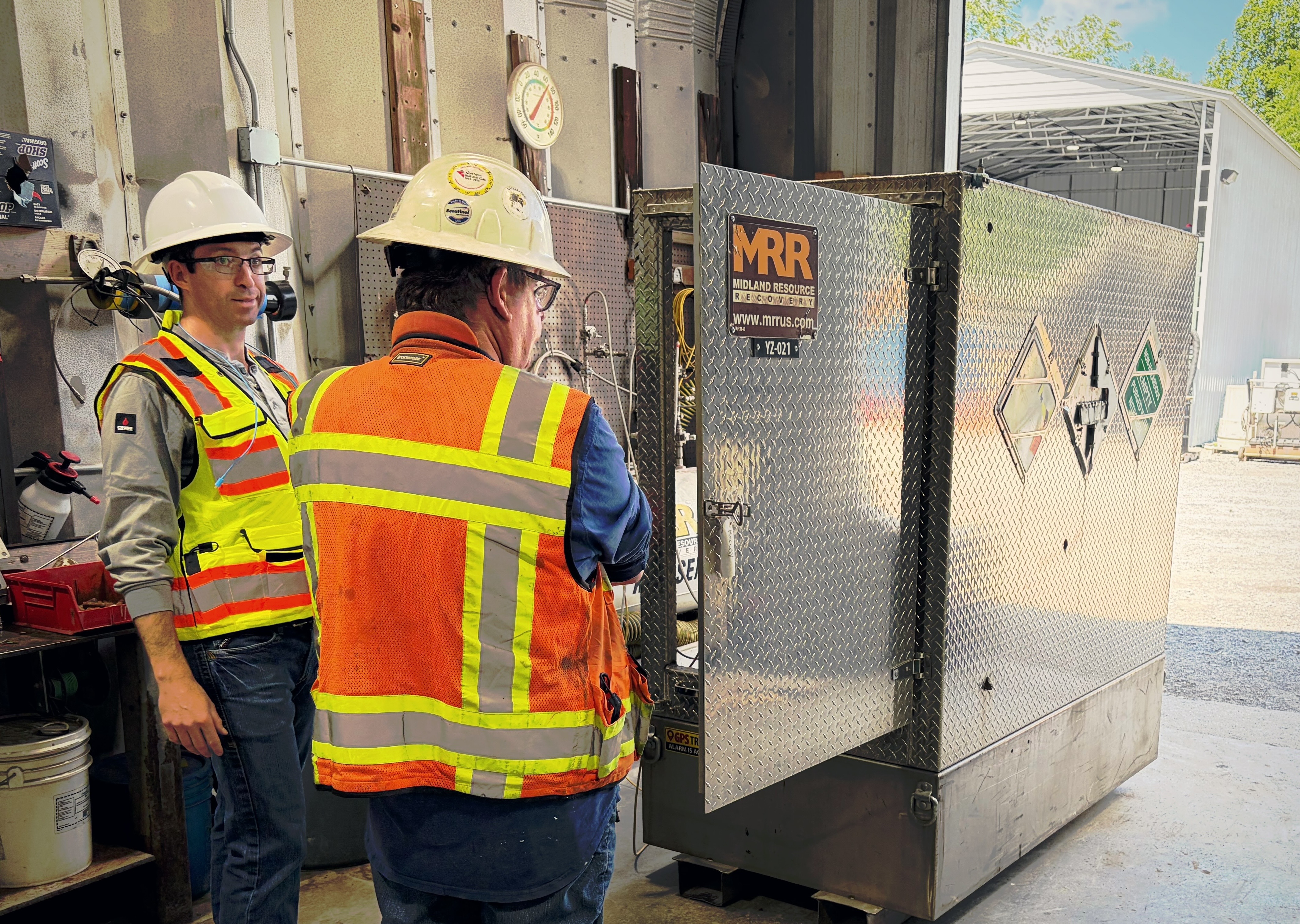
MRR works with utilities, RNG developers, landfill operators, agricultural projects and energy companies across Canada and the United States on natural gas odorization. MRR can support RNG projects with:
– odorization system design
– new odorizer equipment
– supplemental odorization
– CNG and virtual-pipeline applications
– pipeline interconnection odorization
– odorant selection
– commissioning and startup
– odorant monitoring
– odor fade testing
– ongoing field service and maintenance
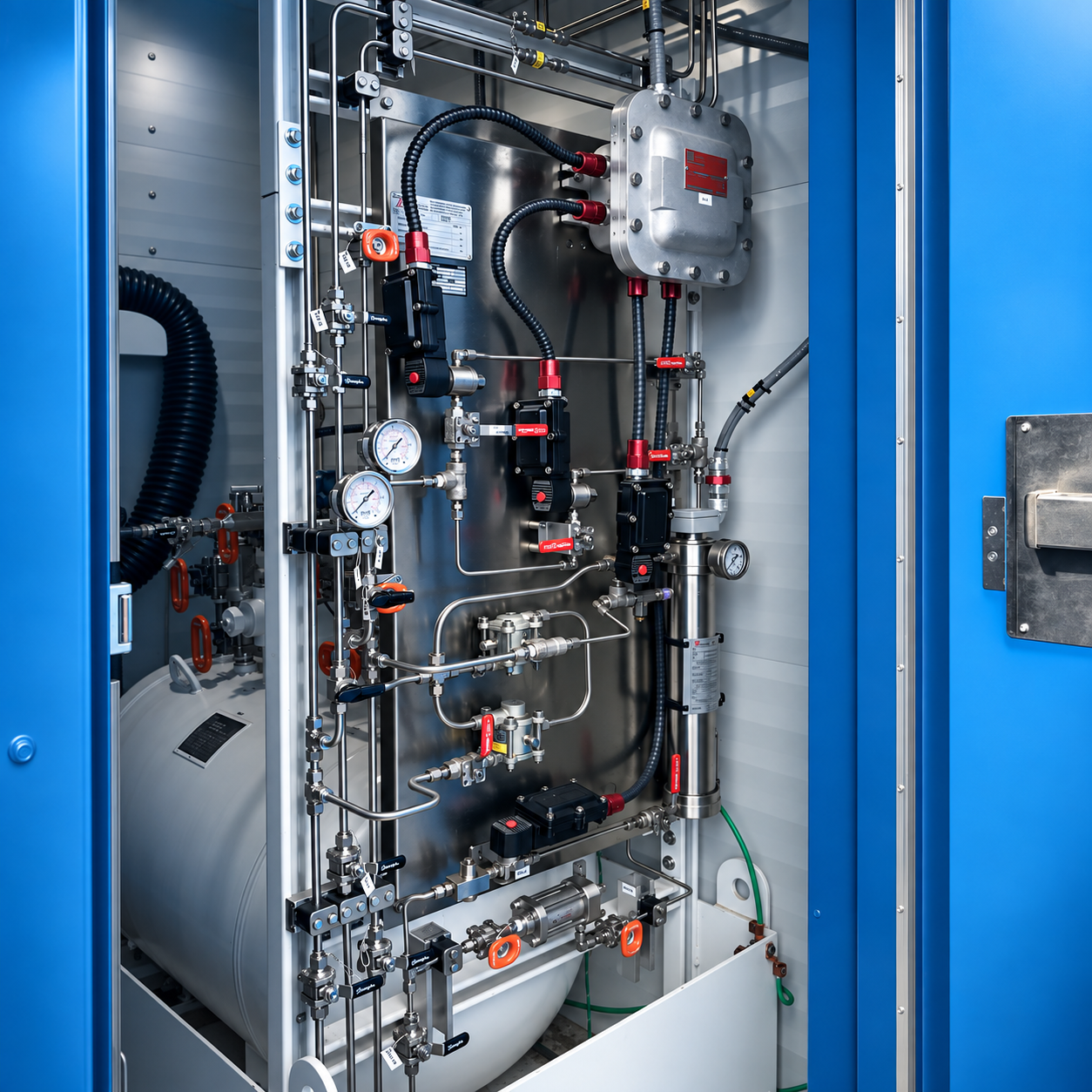
For an RNG project, the objective is not simply to determine whether odorization is required. It is to design an odorization system that delivers the right odorant, at the right concentration, at the right point in the gas stream, across the full operating range of the facility.