Every utility engineer working in natural gas eventually has the same conversation with a new hire, a board member, or a curious customer: what exactly is the stuff that makes gas smell? The answer is mercaptan, and the answer below the headline is a small family of sulfur-containing compounds with specific properties that make them suitable for the job they do. This article is the working reference: what mercaptan is, how it is selected, and what it does once it is in the gas.
The chemistry
Mercaptan is the older common name for what chemists now call thiols. A thiol is an organic compound built around a carbon skeleton with a sulfur-hydrogen group attached. The structural formula is R-SH, where R is a hydrocarbon chain. The sulfur-hydrogen group is the source of the smell.
Thiols are the sulfur analogs of alcohols. An alcohol has an oxygen-hydrogen group (R-OH); a thiol has a sulfur-hydrogen group (R-SH). The substitution looks small on paper. The consequence for human perception is enormous. The human nose detects most thiols at concentrations in the parts per billion. The threshold for ethanol, the most familiar alcohol, is about a million times higher.
The thiols used in natural gas odorization are short-chain, typically two to four carbons. The shortest is methanethiol (one carbon), but it is a gas at room temperature and harder to handle in liquid blend form. The most common single-component odorant is tertiary butyl mercaptan (TBM), a four-carbon thiol with a branched structure. It is liquid at ambient conditions, stable in storage, and delivers a strong and characteristic odor in gas.
Beyond TBM, the odorant blends in widespread use combine several thiols and related compounds. Isopropyl mercaptan (IPM) and normal propyl mercaptan (NPM) are common blend components. Tetrahydrothiophene (THT, a cyclic sulfur compound rather than a thiol) is widely used in Europe and in some North American applications. Dimethyl sulfide (DMS) is sometimes blended in to modify the odor character.
Commercial odorant products combine these in various ratios to balance odor strength, chemical stability, soil mobility, and resistance to oxidation. The product names that operators encounter — Scentinel, Spotleak, and others — refer to specific blend formulations from specific suppliers.
Why the human nose detects it
The reason mercaptan works as an odorant comes from two facts of biology and chemistry.
The first is that human olfactory receptors evolved to detect sulfur compounds with extraordinary sensitivity. Many of the natural cues that warn humans about spoiled food, decomposing material, or biological hazards involve sulfur compounds. The olfactory system is calibrated to notice them. A thiol entering the nasal passage triggers receptors that fire at extremely low molecular concentrations.
The second is that thiols are chemically distinctive. The sulfur-hydrogen bond has a specific stretching frequency and a specific polarization that the receptors recognize. Few common ambient compounds produce a similar signal, which is part of why the smell of mercaptan tends to stand out rather than blend into the background.
Together, these properties give mercaptan a detection threshold in the parts per billion, well below the concentrations associated with health effects. The substance is designed to be recognizable well before it becomes dangerous. This is the entire basis of natural gas odorization: a warning that arrives early enough to matter.
Why mercaptan and not something else
Several requirements have to be met simultaneously for a compound to work as a natural gas odorant. The regulatory requirements under 49 CFR 192.625 set the floor; practical operating considerations narrow the field further.
Detectability across temperature and humidity ranges. The odorant must remain perceptible whether the gas is delivered in dry winter air at 20 degrees Fahrenheit or humid summer air at 95 degrees. Mercaptan blends maintain detection thresholds across this range. Many candidate compounds do not.
Chemical stability in the pipeline. The odorant must survive contact with steel, plastic, and the typical contaminants in a distribution system without breaking down or reacting away. Thiols are reactive — that is part of the chemistry — but the specific thiols selected for odorization have enough stability to survive a normal residence time in the gas before reaching the customer. The reactivity that does occur drives odor fade, which is managed through pickling and design rather than by changing the odorant.
Combustion product profile. Whatever the odorant is, it gets burned along with the gas at the customer’s appliance. The combustion products of mercaptan are carbon dioxide, water, and sulfur dioxide. The sulfur dioxide is the reason that natural gas appliances produce trace acidic gas that homeowners occasionally smell after a furnace cycle. At the concentrations involved, this is not a health concern but it is part of the chemistry.
Low water solubility. Where gas contacts free water in low points or condensate traps, a water-soluble odorant would partition into the water and disappear from the gas. The 49 CFR 192.625(d) limit of 2.5 parts per 100 in water is a real constraint on candidate compounds. Most thiols sit well below this limit.
Manageable handling properties. The odorant has to be transportable, storable, and dispensable through standard equipment. It must not be acutely toxic in the small quantities that operators handle, must not be corrosive to standard materials, and must be available in commercial quantities at reasonable cost. Thiols meet all of these requirements with established supply chains and equipment standards.
No single thiol meets every requirement perfectly. The blends that dominate the market are engineered around trade-offs: slightly more of one compound for stability, slightly less of another for soil mobility, a small percentage of a third for odor character. The blend a particular utility uses reflects decades of operating experience with that blend in that system.
Handling properties that matter
For procurement and operations teams, a few mercaptan properties drive day-to-day decisions.
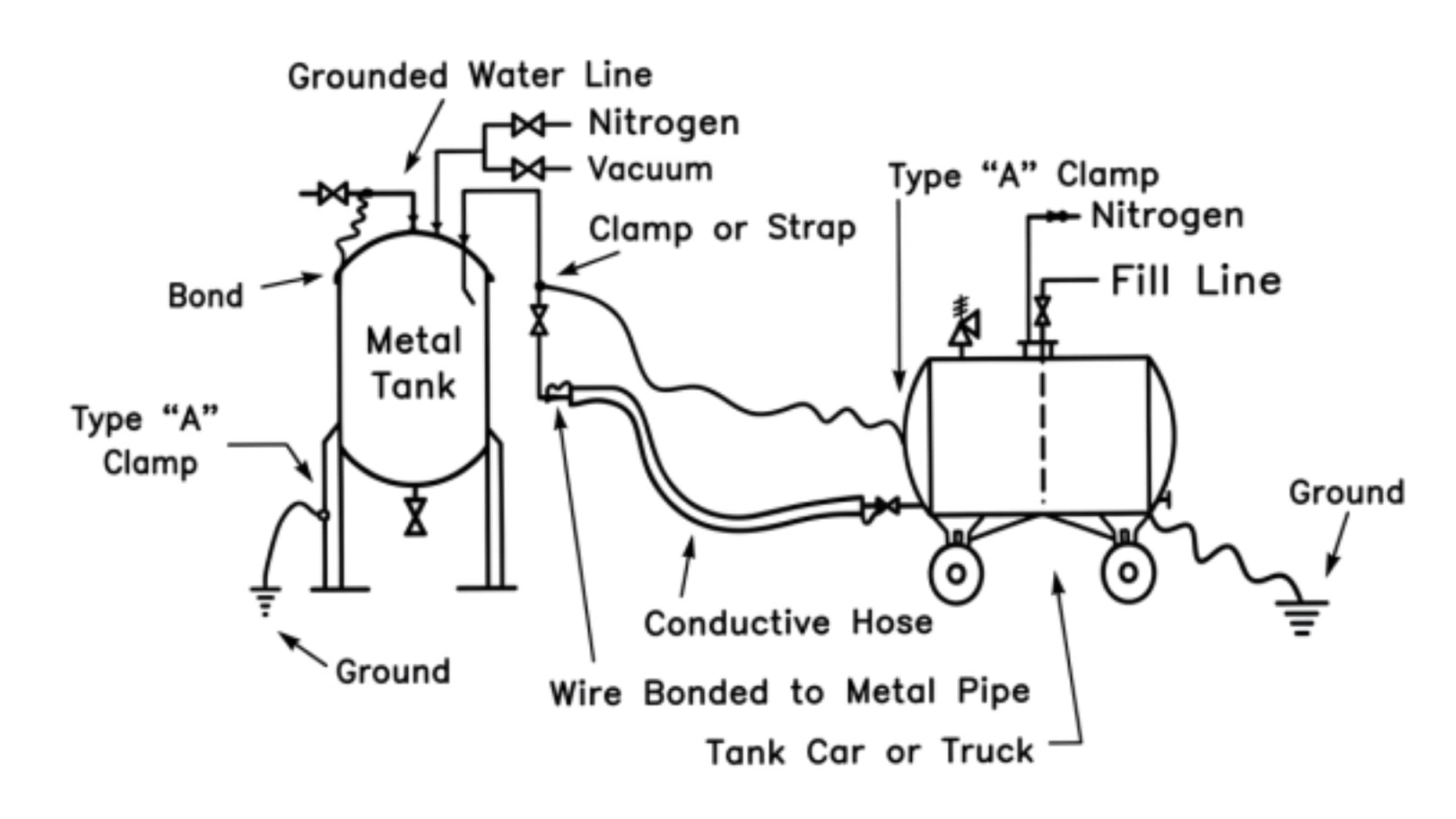
- Flash point. Mercaptan blends are flammable liquids with flash points in the range typical of light hydrocarbons. Storage and transfer follow flammable liquids practice: bonding and grounding, vapor management, ignition source control.
- Vapor pressure. Mercaptan vapor pressure at ambient temperatures is high enough that any open vessel will release vapor immediately. Storage tanks operate as closed systems with vapor recovery or controlled venting. Open-air work near a mercaptan source generates an immediate odor signature within smell range.
- Density. Product behavior varies by specific blend — check the product SDS for density and other physical properties before assuming how a spill will behave.
- Color and appearance. Most mercaptan blends are clear to pale yellow liquids. Color change in storage can indicate contamination or oxidation and is worth noting during routine inspections.
- Material compatibility. Mercaptan is compatible with carbon steel, stainless steel, and most fluoropolymer seals and gaskets. It is incompatible with copper, brass, and some elastomers, which will corrode or degrade in service. Equipment material selection at the design stage is straightforward but worth doing intentionally.
The supply chain behind the odor
The thiols used in natural gas odorization are produced by a small number of specialty chemical manufacturers. The volumes involved are modest compared to commodity chemicals: global production of natural gas odorants is measured in tens of thousands of tons per year, not millions. The supply chain is correspondingly tight, with most production concentrated at a handful of plants.
For utility operators, this has two practical implications. First, supply disruption is possible. A single plant outage can tighten the market for the affected product line for months.
Second, lead times on bulk orders are not trivial. Procurement planning that assumes mercaptan is available on demand is fragile.
MRR distributes mercaptan and odorant blends across North America from production and supply through final delivery to the customer site. The work is part of an integrated odorization service — chemistry, equipment, and field operations together — rather than a commodity supply transaction. For operators thinking about their odorant supply for the next year or the next five, the conversation starts with the system and ends with the chemistry, not the other way around.
Working with the substance
Mercaptan does the job it does because of specific chemistry. Engineers who work with the substance regularly develop a working familiarity with its properties: the smell that announces a transfer in progress, the temperature dependence of vapor pressure, the way the substance behaves in a contained space versus an open one. None of this familiarity replaces the safety data sheet, the procedures, or the training. It complements them.
For utility engineers, operations managers, and the technicians who handle odorant in tank quantities, the substance rewards careful attention. The chemistry is well understood. The properties are predictable. The operations that work with it are routine when they are run with discipline and unforgiving when they are not. The reason for that is the same reason mercaptan works as an odorant in the first place: the substance is built to announce its presence well before concentrations become hazardous. Operators who work with it learn quickly to take the announcement seriously.