Watchtower™ Remote Monitoring
Know What's in the Tank
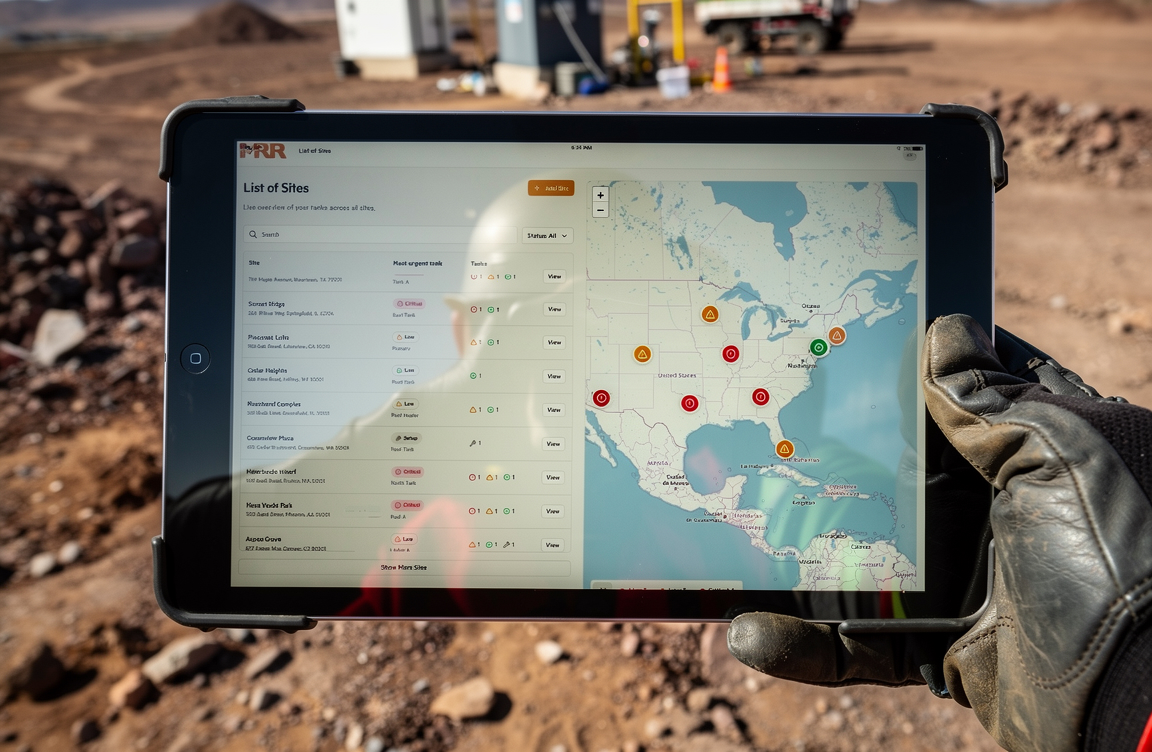
Running low on odorant is a quiet compliance risk. Nothing alarms and nothing fails; the tank simply gets closer to empty than anyone realizes, and the first sign of trouble is a reading that shouldn't be that low. Meanwhile, crews spend hours driving to sites that didn't need a visit.
Watchtower puts odorant inventory on a screen. Tank levels report continuously over a cellular or wireless connection to a dashboard your team logs into, with alerts by text or email when a level crosses a threshold you set. It retrofits to most existing odorant tanks regardless of who built them, powered by AC or solar depending on the site, and can also be specified into new installations from the start. Refills get scheduled against actual consumption instead of the calendar, and whether your team watches the dashboard or MRR does it for you, the visibility works the same either way.
Monitoring That Changes the Schedule
Refills Based on Consumption
Deliveries are scheduled against what the system is actually using, not a fixed interval. Fewer emergency refills, and fewer half-full tanks topped off for no reason.
Fewer Unnecessary Site Visits
Remote visibility replaces the drive-out-and-look check. Field time goes to the sites that need attention, which is rarely the ones on this week's rotation.
Data When You Need to Prove It
Level history is recorded and retrievable: useful for planning, useful for troubleshooting, and useful when someone asks you to demonstrate the system was supplied and operating.
Visibility Into Odorant Inventory
1
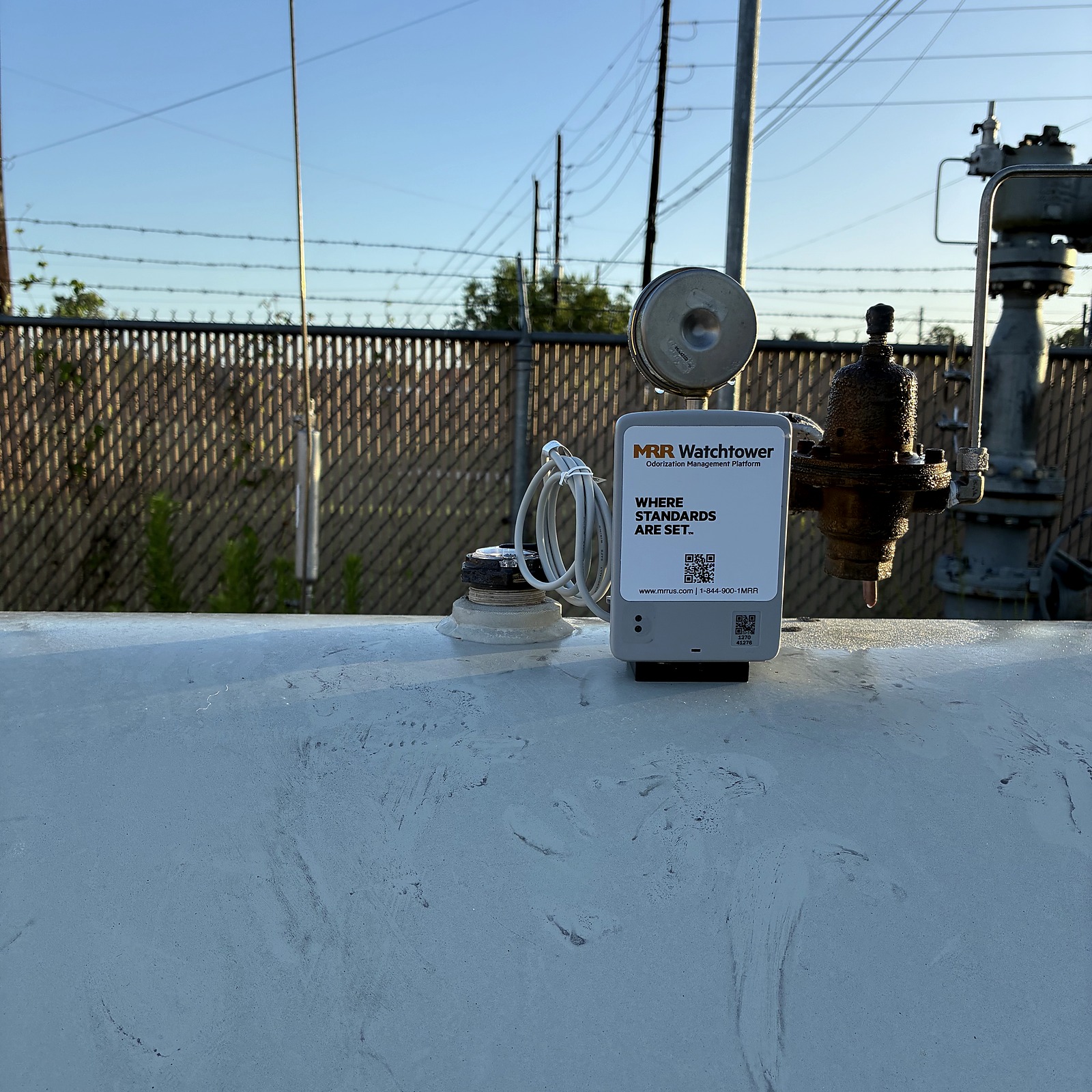
Continuous Level Monitoring, Retrofittable
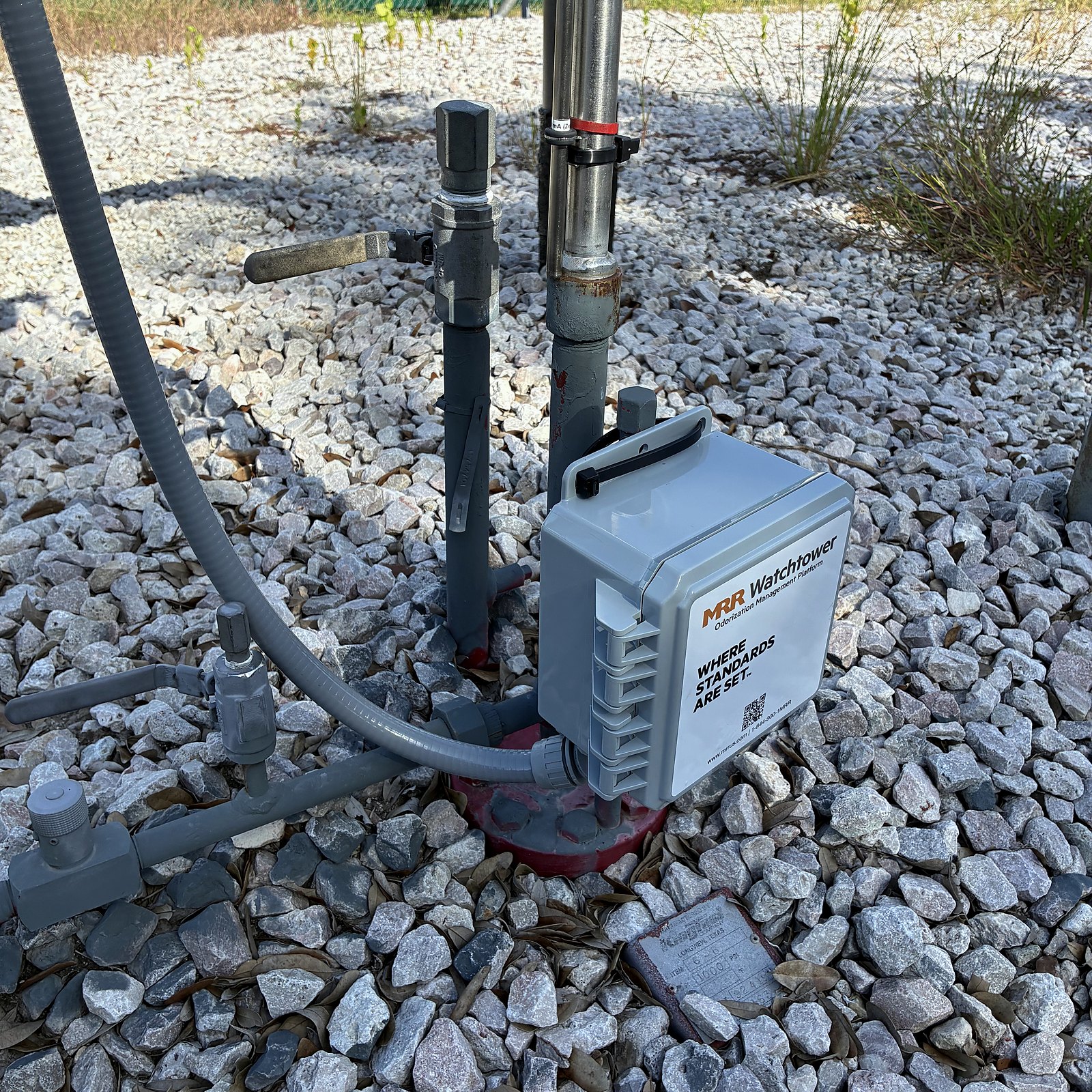
Level measurement reports odorant inventory from the station over a cellular or wireless connection, powered by AC or solar depending on the site. Watchtower retrofits to most existing odorant tanks regardless of manufacturer, so it can go onto the assets you already operate rather than waiting for the next new build. It can also be specified into new MRR installations and bypass odorizers from the start.
Dashboard and Alerts
Levels and history live on a password-protected dashboard your team logs into from any computer or phone. Thresholds are yours to set, and when a level crosses one, alerts go out by text or email to the people who need to act. A slow change in consumption shows up as a trend on the chart rather than a surprise in the field.
2
3
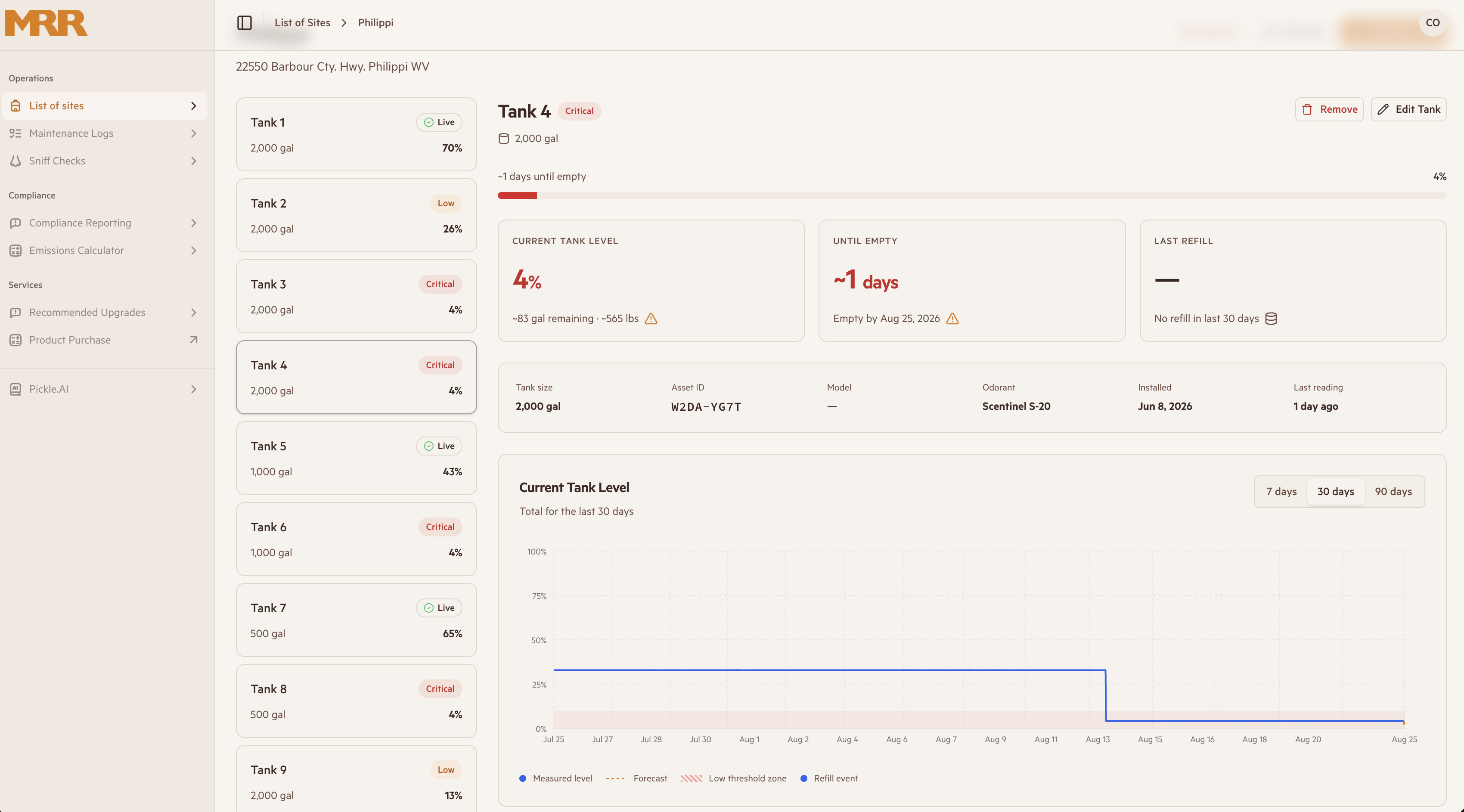
Consumption-Based Refill Scheduling
With real consumption data, refills stop being guesswork. Deliveries can be scheduled against the rate your system is actually using, reducing both emergency runs and unnecessary site visits, and keeping inventory in the range that keeps compliance on solid ground.
Monitored by Your Team, or by MRR
Watchtower works either way: some operators want the levels in their own hands and their own dashboard. Others would rather MRR watch the levels, flag what needs attention, and schedule the refills, turning odorant inventory into something they no longer have to think about. The visibility is the same; the difference is who is watching it.