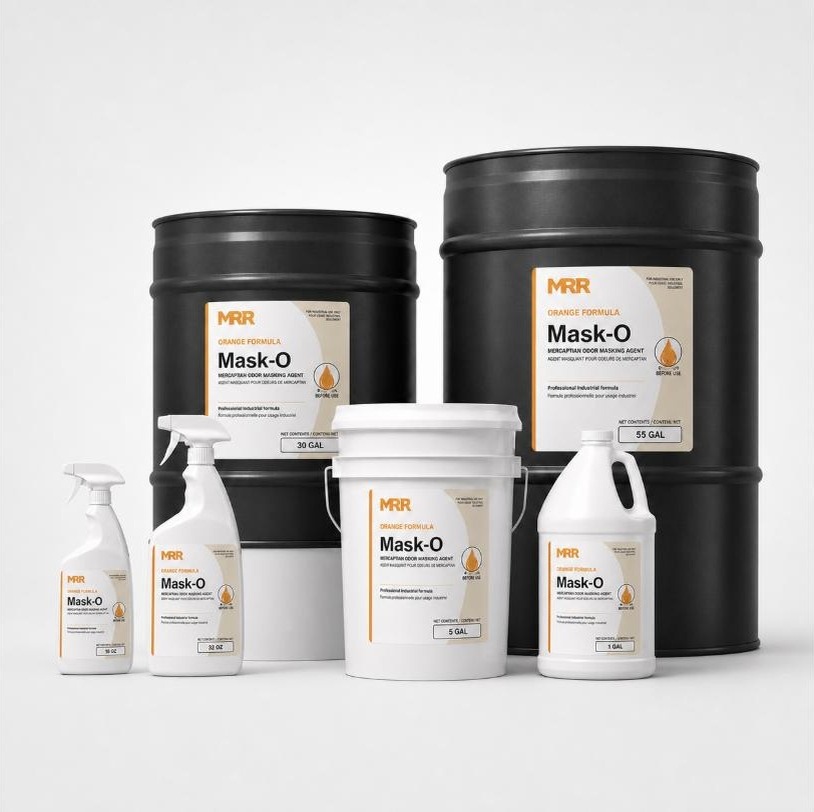
Mercaptan Odor Removal & Control Liquids
Mercaptan Odor Neutralizers
Natural gas odorants are intentionally detectable at extremely low concentrations. A small amount of released vapor or contaminated material can therefore create a significant odor issue well beyond the immediate odorization station. Effective odor control begins by understanding where the odorant is coming from and selecting the appropriate method to contain, capture, adsorb, neutralize or otherwise manage it. MRR develops and supplies odor-control products based on decades of working directly with mercaptan and other gas odorants in the field.
Complete Odor Control
Capture the Vapor
Activated-carbon filtration adsorbs odorant from controlled air or vapor streams before it disperses beyond the work area.
Neutralize
DEOmer reacts with mercaptan to break it down chemically, eliminating odor at the source in one all-season formula.
Mask
Mask-O covers the smell with a fresh orange scent, a lower-cost option for field work when full neutralization isn't needed.
MRR Odor Control Products
1
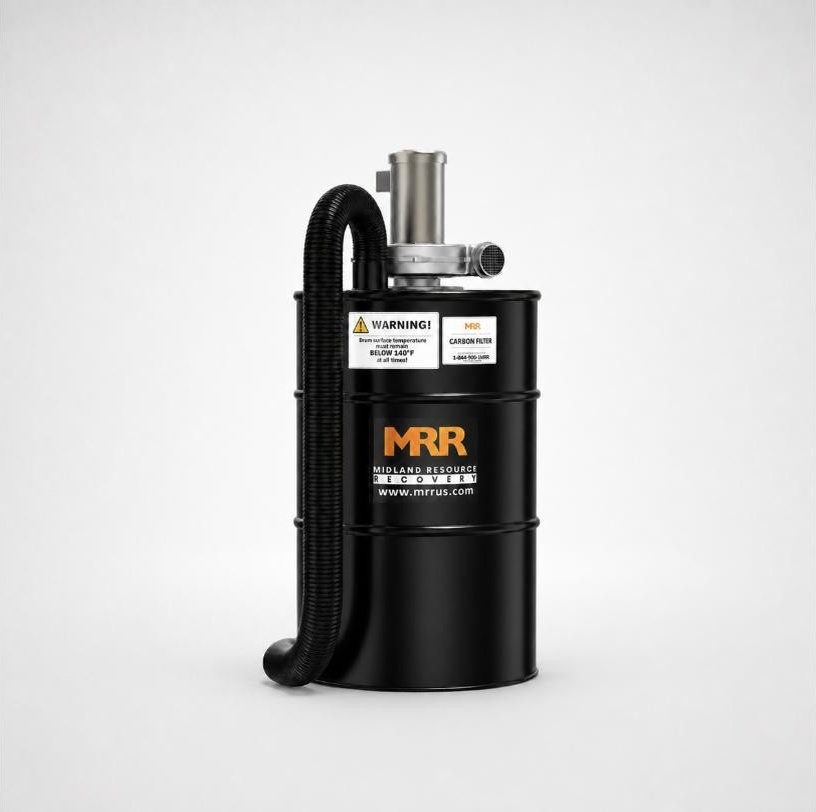
EZ Carb™ Activated Carbon Filters
Active, blower-driven filtration pulls odorant vapor through activated carbon media before it's released to atmosphere. Sized for continuous duty at odorization stations and compressor sites where airflow needs to be controlled.
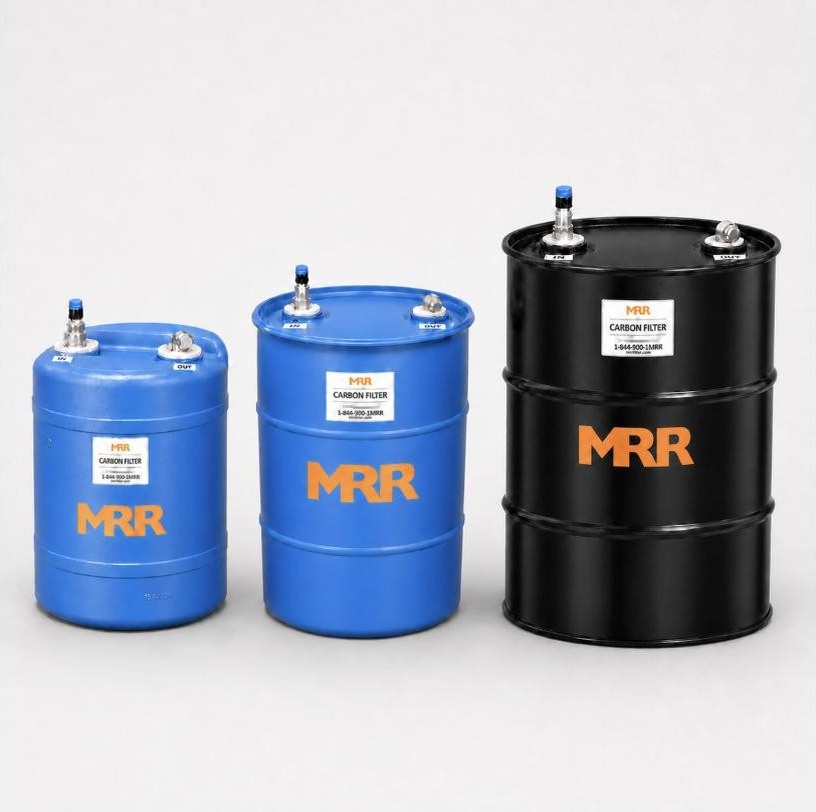
EZ Carb™ Passive Filters
Passive, vent-line filtration captures odorant vapor with no blower required, ideal for smaller relief and vent points. Uses the same carbon media as the active units, sized for lower-flow applications.
2
3
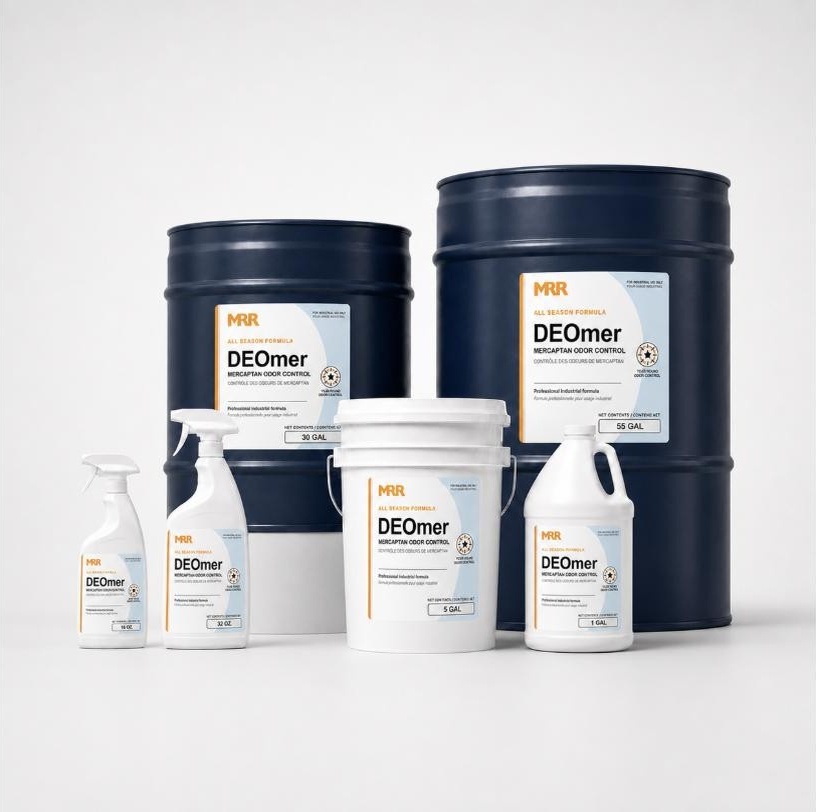
DEOmer
A liquid neutralizer that reacts with mercaptan to eliminate odor chemically at the source, rather than masking it. Works across the same temperature range year-round, so there's no separate winter formulation to stock.
Mask-O
An orange-scented liquid that covers mercaptan odor for routine maintenance and field work where full chemical neutralization isn't required. A lower-cost option that still keeps odor complaints down on site.