Emergency Mercaptan Spill Response
24-Hour Spill Response
Odorant spills can't be scheduled or budgeted. A failed fitting, a transfer gone wrong, or a damaged tank puts mercaptan on the ground, and within minutes the problem stops being an operational one and becomes a public one, measured in leak calls, complaints, and emergency dispatches.
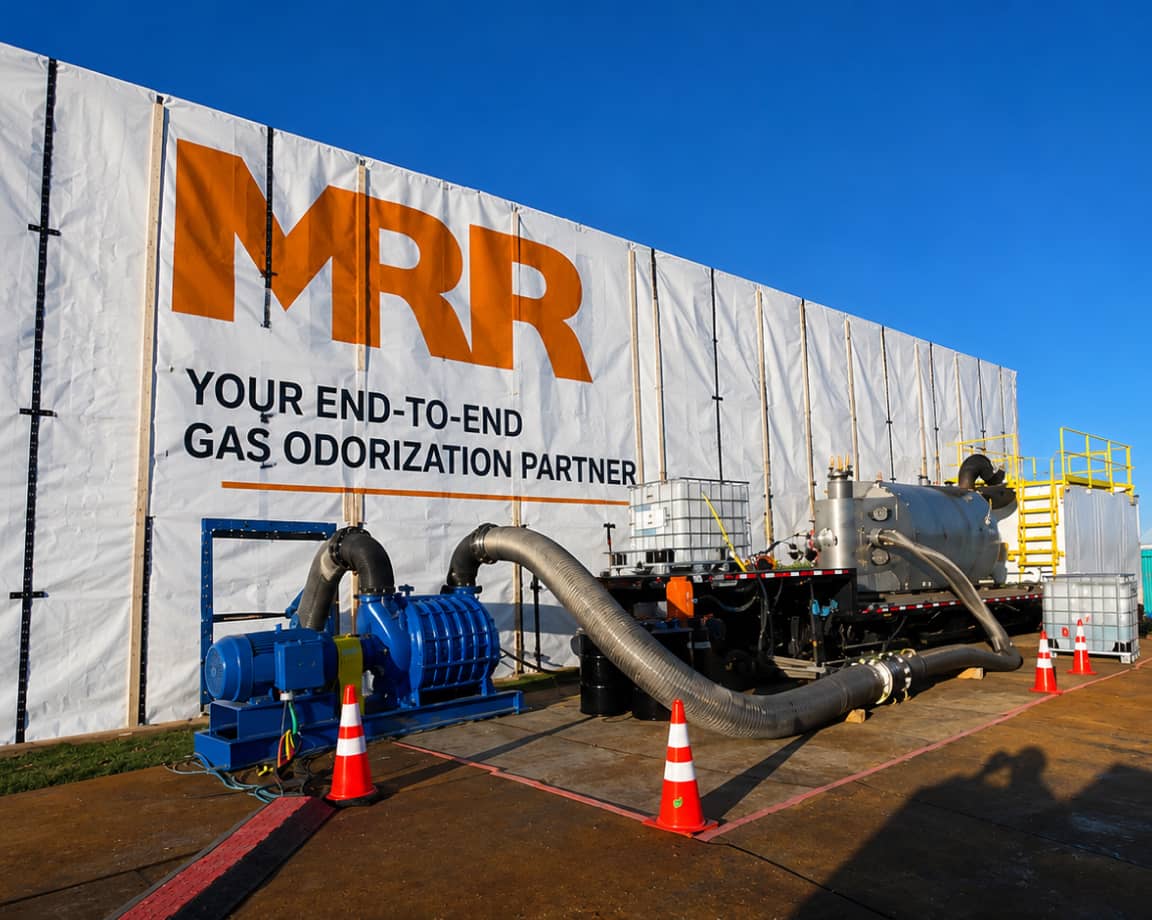
MRR mobilizes trained crews to contain the release, neutralize the odor, and remove the contaminated material, then transports it under MRR control for final treatment at the processing facility in Philippi, West Virginia. One call and one accountable party, from the first hour through final disposal. Response uses mercaptan-specific odor-kill chemistry designed to break down the odor compound rather than mask it, with negative-pressure containment and carbon filtration available when vapor control near occupied areas is the bigger risk. Contaminated material is containerized in DOT/TC-rated drums for transport. If there is an active release or immediate danger, follow your emergency plan and contact the appropriate emergency authority first.
About Emergency Odorant Spill Response
Spill response works best when it's simple to trigger and consistent to run: one number to call, one accountable crew, and a process that carries through from containment to final disposal without changing hands. The principles below are what make that process repeatable under pressure.
Fast Mobilization
A 24/7 line reaches people who do this work, not a message service. Crews and equipment deploy on short notice to contain the release before it spreads. Where immediate action is needed before the crew arrives, dispatchers can talk your team through initial containment over the phone.
Odor Actually Neutralized
Containment alone doesn't stop the calls. MRR uses mercaptan-specific odor-kill chemistry to neutralize odorant rather than mask it, bringing the site back under control. When vapor is the bigger risk, the work area can be enclosed and held under negative pressure, with air drawn through carbon filtration so it's captured instead of drifting.
Handled Start to Finish
Contaminated soil, gravel, and components leave with MRR under strict transport protocols and are destroyed at MRR's own facility, with documentation for your regulatory file. Cradle to grave, one accountable party. Where mercaptan has reached soil or water beyond what can be excavated, MRR remediates it directly rather than treating containment as the end of the job.
The Call and Mobilization
Call 1-844-900-1MRR at any hour and reach a technician, not an answering service, who assesses what happened, what was released, and what's at risk, including nearby population, water, and surfaces. MRR mobilizes the closest available crew and equipment accordingly, and where immediate action is needed before we arrive, we can talk your people through initial containment so the situation doesn't get worse while help is on the way.
Containment and Neutralization
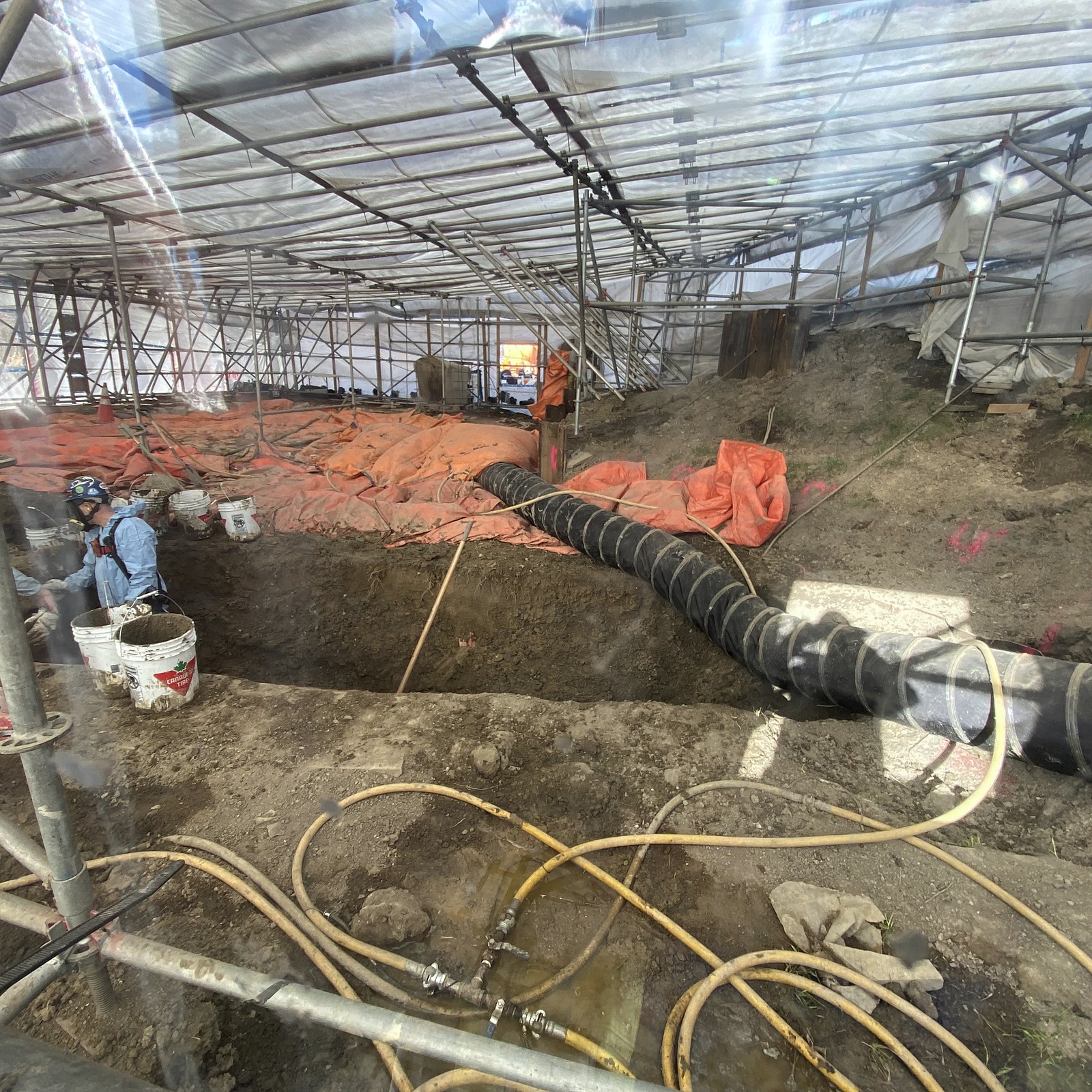
The first priority is stopping the spread: absorbents and containment to hold the product, epoxy and sealant repairs to stop an active release from damaged equipment. Where vapor is the bigger problem, such as a populated area or a site that can't afford a plume of odor, the work area can be enclosed and held under negative pressure, with air drawn through carbon filtration so vapor is captured instead of drifting. Odorant is then treated with mercaptan-specific odor-kill chemistry designed to break down the odor compound rather than cover it, addressing the source of the smell rather than masking it.
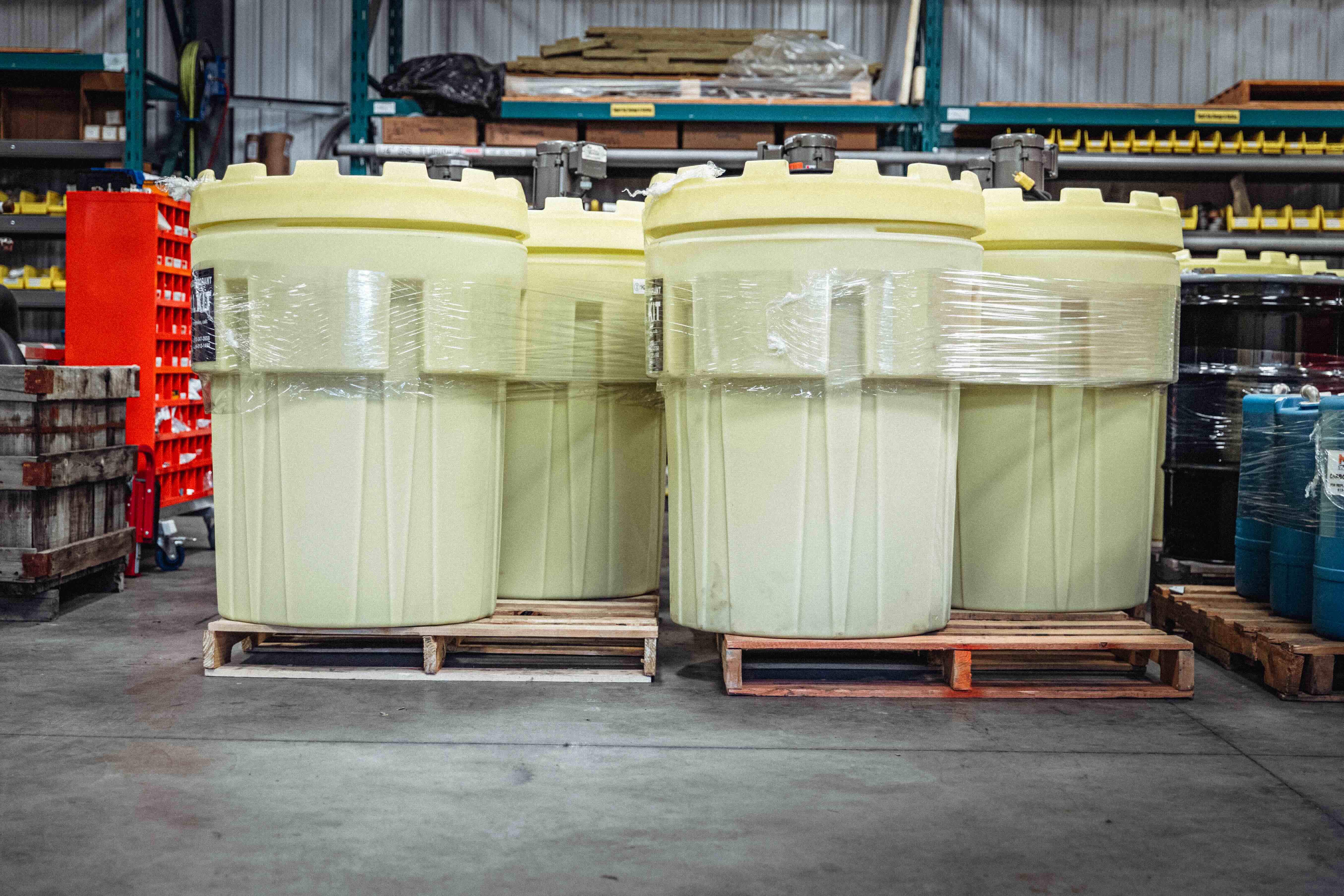
Removal, Transport, and Destruction
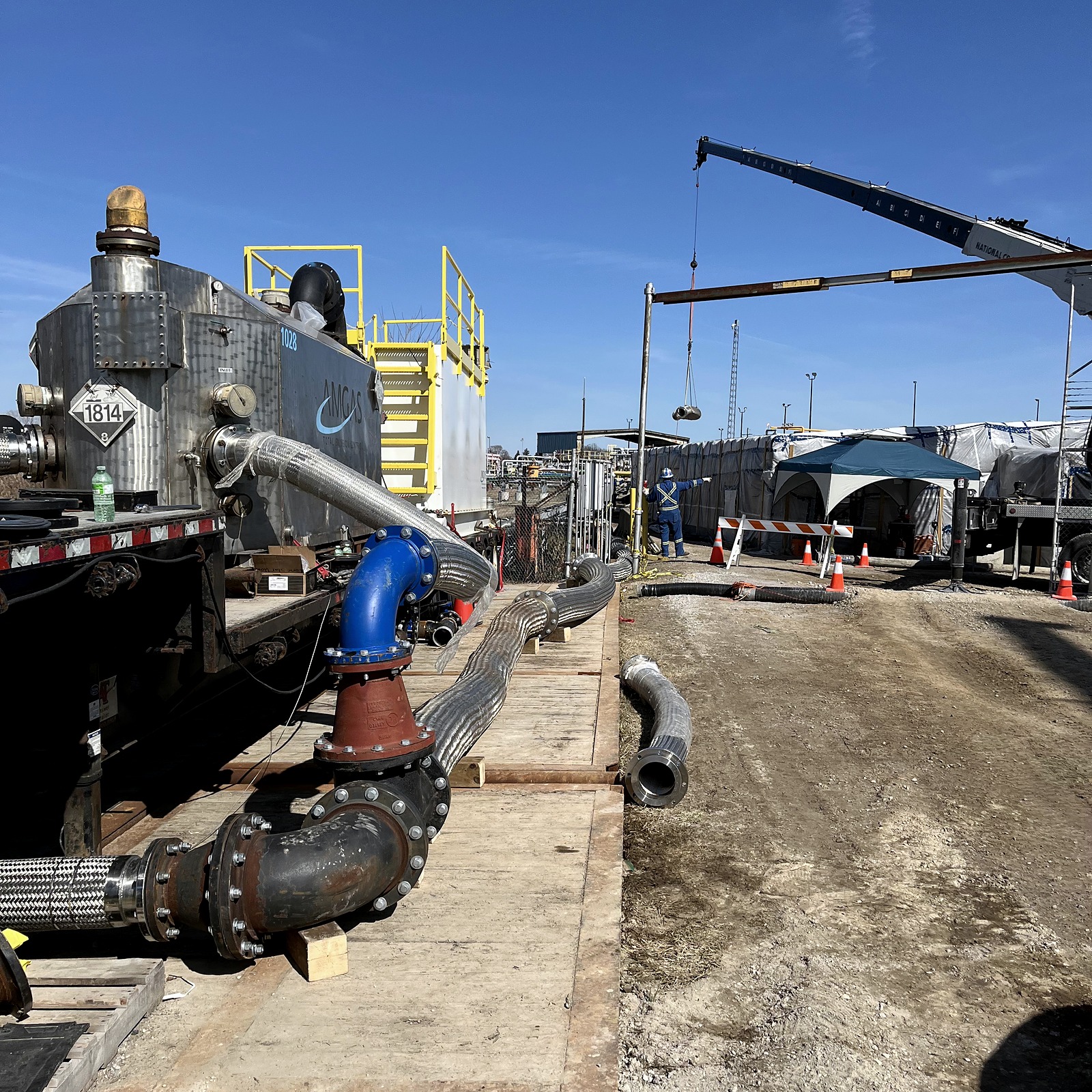
Odorant-contaminated soil, gravel, and components are containerized in DOT/TC drums with liners that hold material without generating leak calls during temporary storage. MRR transports the waste under strict protocols, with DOT/TC-rated containers available where minimizing odor risk during transport is critical, and applies a proprietary de-odorization process at the West Virginia facility for final destruction. The work is carried out under MRR's standard insurance coverage.
Environmental Remediation
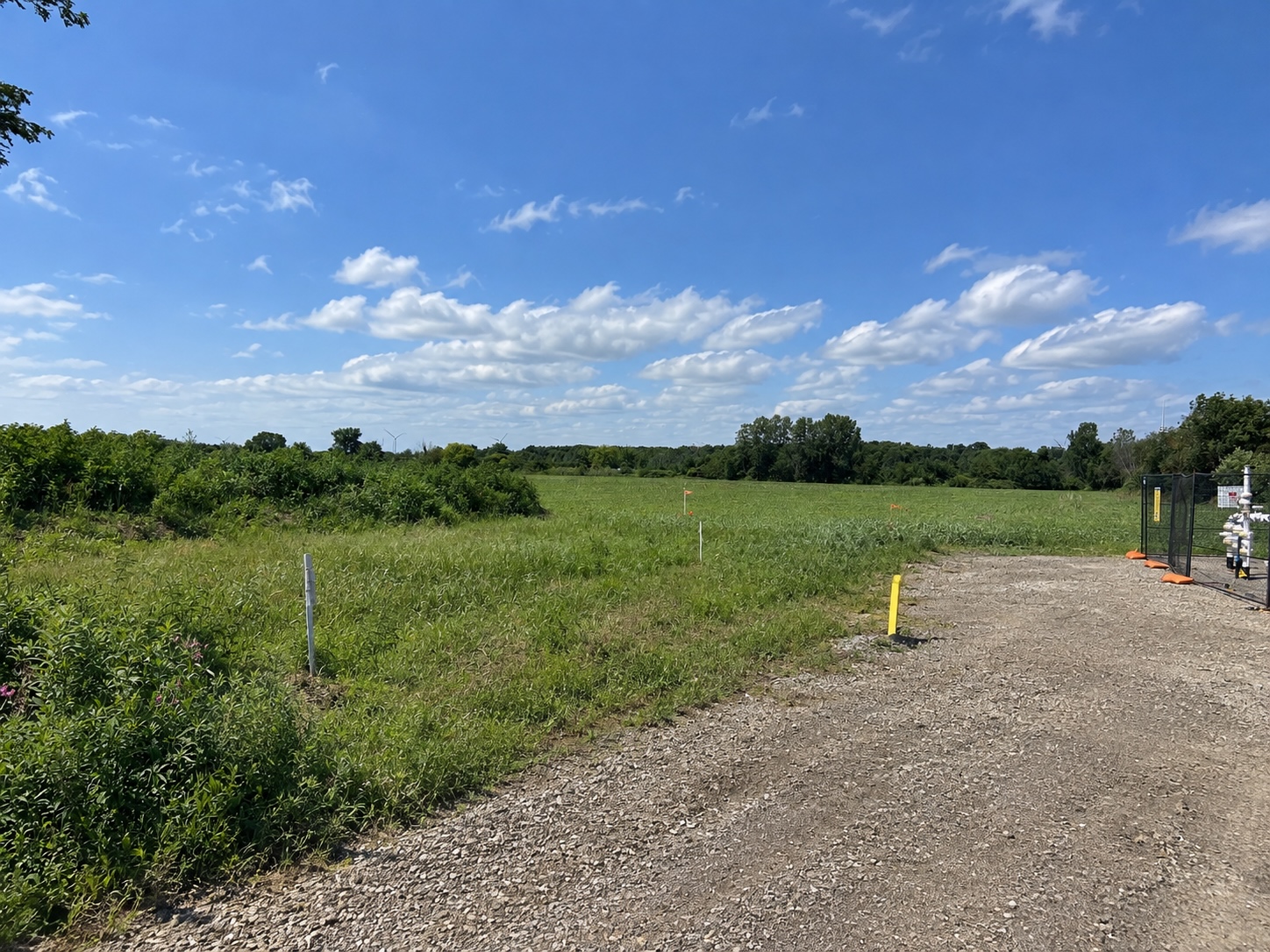
Not every affected site can simply be dug up and hauled away. Where mercaptan has reached soil that can't be fully excavated, or water beyond the immediate spill area, MRR remediates it directly rather than treating containment as the end of the job. The same odor-kill chemistry and carbon filtration used during initial response carry through the remediation work. Everything is documented as it's completed, giving you a clear record for your own regulatory file.
Spill Now? Call 1-844-900-1MRR.
Emergency Odorant Spill Response
Frequently Asked Questions
Call 1-844-900-1MRR right away. A technician, not an answering service, will assess what happened and what's at risk, and can talk your team through initial containment while a crew mobilizes.
MRR's spill line is staffed 24/7, and crews and equipment deploy on short notice to contain the release before it spreads.
Both. After containment, MRR uses mercaptan-specific odor-kill chemistry to neutralize the odorant rather than mask it, and can hold the work area under negative pressure with carbon filtration when vapor is the bigger concern.
Contaminated soil, gravel, and components are transported under MRR's own control and destroyed at MRR's processing facility in Philippi, West Virginia, with documentation provided for your regulatory file.
Yes. Where mercaptan has reached soil that can't be fully excavated or water beyond the immediate spill area, MRR remediates it directly using the same odor-kill chemistry and carbon filtration from the initial response.
Explore More
Odorization Services
Compliance & Validation